
Anime for Japanese Learners
42 shows sorted by how hard the Japanese is, not by how good the show is
N5 to N4
Study alongside: N5 vocabularyN5 grammar

K-ON!
けいおん!
A high school light music club that mainly drinks tea.
- You hear
- Club room chatter built from short casual lines and sentence-final particles: ね, よ, かな, だよね. Tea, cake and school vocabulary on repeat.
- Watch out
- Lines trail off unfinished, the way real casual speech does.

Polar Bear's Café
しろくまカフェ
A polar bear runs a café and talks to a panda about nothing in particular.
- You hear
- The slowest, clearest dialogue on this list. Café orders, food, jobs and small talk, delivered with pauses a beginner can actually use.
- Watch out
- Built on homophone puns, so expect to miss jokes long before you miss the plot.
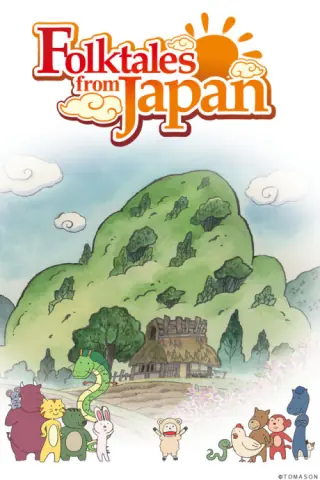
Folktales from Japan
ふるさと再生 日本の昔ばなし
Three narrated Japanese folk tales per episode, around seven minutes each.
- You hear
- Made for Japanese children, so the narration is clear, standard and slow. Plain past forms and the quotative と, over and over.
- Watch out
- Old characters speak in storybook forms like じゃ and ~ぬ that nobody uses today.
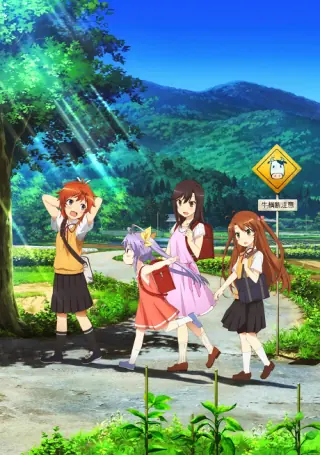
Non Non Biyori
のんのんびより
Four girls, one rural school, one classroom for all of them.
- You hear
- Speakers from age seven to seventeen in the same scene, so you hear child speech and teenage casual speech side by side. Nothing is rushed.

Girls' Last Tour
少女終末旅行
Two girls ride a motorbike through the ruins of a city, looking for food.
- You hear
- Long silences and two speakers. Sentences are short, literal and spaced far apart, which is a gift when full-speed dialogue still overwhelms you.
- Watch out
- So little is said that vocabulary comes slowly.
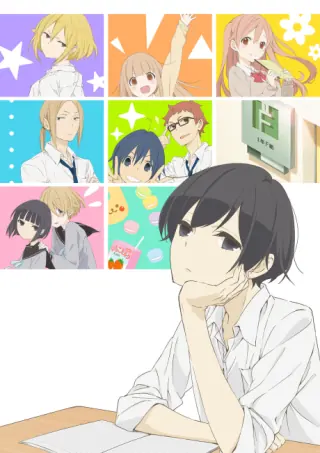
Tanaka-kun is Always Listless
田中くんはいつもけだるげ
A boy whose entire goal is to conserve energy, and the friend who carries him.
- You hear
- Deadpan delivery with space between every line. Short exchanges, school vocabulary, and a main character who never raises his voice.
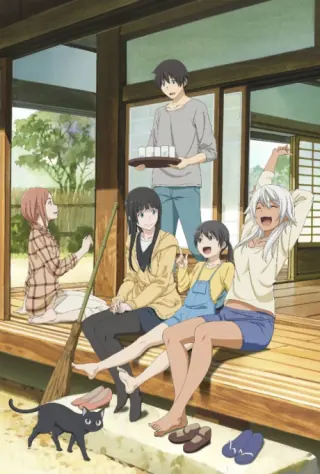
Flying Witch
ふらいんぐうぃっち
A trainee witch moves in with relatives in Aomori and mostly runs errands.
- You hear
- Shopping, cooking, weather and family talk at a walking pace. Almost every scene is a situation from an N5 textbook chapter.
- Watch out
- Some side characters carry a light Tsugaru accent.
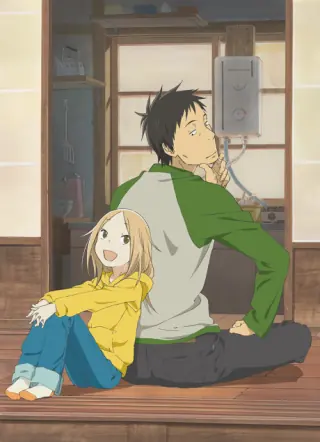
Bunny Drop
うさぎドロップ
A thirty year old man suddenly raises a six year old.
- You hear
- Childcare and household vocabulary in a realistic register: nursery pickups, shopping, cooking. An adult and a small child, so two speeds in one scene.
- Watch out
- Rin drops particles the way children do.

Is the Order a Rabbit?
ご注文はうさぎですか?
A girl boards above a café and ends up working the counter.
- You hear
- Service Japanese you can copy: greetings, taking orders, いらっしゃいませ and かしこまりました, next to casual talk with friends.
N4 to N3
Study alongside: N4 vocabularyN4 grammar

HAIKYU!!
ハイキュー!!
A short boy decides he is going to play volleyball anyway.
- You hear
- Loud, but the vocabulary is tiny and repeats every match. Senpai and kouhai speech is modelled constantly, which is hard to hear anywhere else.

Anohana: The Flower We Saw That Day
あの日見た花の名前を僕達はまだ知らない。
Childhood friends are pulled back together by the one who died.
- You hear
- Contemporary family and friend register in eleven episodes. Emotional scenes are delivered slowly and clearly.
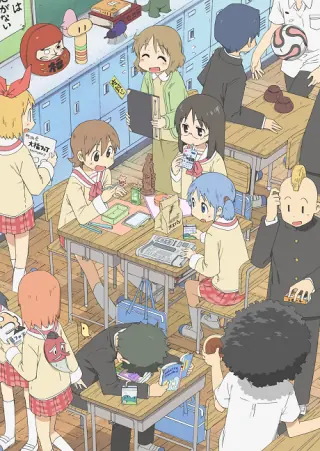
Nichijou - My Ordinary Life
日常
School comedy where a goat arrives and nobody comments on it.
- You hear
- Punchlines land fast but the sentences are short. Exclamations, reactions and the whole grammar of being startled.
- Watch out
- Sketch comedy pace. Pause often.

Your lie in April
四月は君の嘘
A pianist who cannot hear his own playing meets a violinist who will not let him stop.
- You hear
- Heavy interior monologue delivered slowly, alongside ordinary school dialogue. The narration is written to be understood.

One Week Friends
一週間フレンズ。
A girl's memories of her friends reset every Monday.
- You hear
- The premise forces repetition: the same introductions, greetings and explanations come back weekly, which is spaced review by accident.

Sound! Euphonium
響け!ユーフォニアム
A school concert band decides to actually try to win.
- You hear
- Polite forms to teachers and seniors against casual forms with friends, in back to back scenes. Music and club vocabulary throughout.
- Watch out
- Kyoto setting, so a light Kansai flavour in places.

Blue Spring Ride
アオハライド
Two people meet again in high school and neither is who they were.
- You hear
- Shoujo romance vocabulary and a useful pattern to watch: characters drop from polite forms into casual as they get closer.

Tsuredure Children
徒然チルドレン
Thirteen minutes of couples failing to confess to each other.
- You hear
- Almost nothing but two-person dialogue. Teenage casual register, natural interruptions, and the full vocabulary of liking someone.

The Devil is a Part-Timer!
はたらく魔王さま!
The Demon Lord conquers Tokyo from behind a fast food counter.
- You hear
- The most practical Japanese on the page: shift rosters, customer service keigo, rent, part-time pay and budgeting, all in an ordinary Tokyo flat.

Monthly Girls' Nozaki-kun
月刊少女野崎くん
A girl confesses to a boy and is handed a job as his manga assistant.
- You hear
- Comic timing carried by clear enunciation. Manga production vocabulary, and jokes that hinge on one person taking a phrase literally.
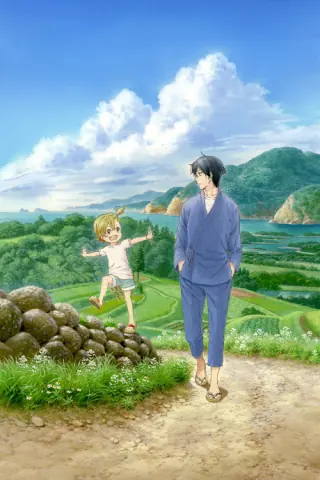
Barakamon
ばらかもん
A calligrapher punches a critic and is exiled to a tiny island.
- You hear
- Village daily life with a real Kyushu dialect running through it. Good for hearing that standard Japanese is not the only Japanese.
- Watch out
- Heavy Goto dialect. Come here once standard forms are solid, not before.

Daily Lives of High School Boys
男子高校生の日常
Teenage boys talk nonsense on a riverbank.
- You hear
- The most natural male casual speech here: 俺, だろ, じゃねえ, ~ぞ, ~っつうの. This is how friends actually talk to each other.
- Watch out
- Rough contracted forms. Useful to understand, wrong to reproduce in a JLPT essay.
N3 to N2
Study alongside: N3 vocabularyN3 grammar

Hunter x Hunter (2011)
HUNTER×HUNTER (2011)
A boy sits an exam to become a licensed hunter and find his father.
- You hear
- Long enough that everything repeats until it sticks. Clear shounen narration early on, political and abstract vocabulary by the later arcs.
- Watch out
- 148 episodes. That is the feature and the cost.
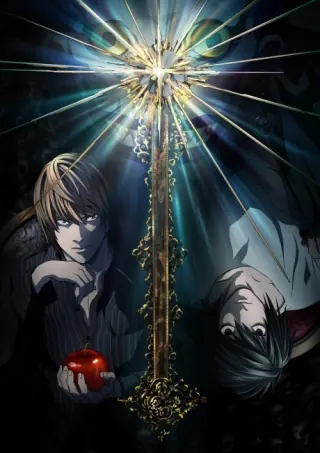
Death Note
DEATH NOTE
A student finds a notebook that kills whoever is written in it.
- You hear
- Long stretches of reasoned monologue, police and legal vocabulary, and a lot of Japanese on screen to read rather than hear.

Fullmetal Alchemist: Brotherhood
鋼の錬金術師 FULLMETAL ALCHEMIST
Two brothers pay for a failed resurrection and try to get their bodies back.
- You hear
- Unusually wide range: military ranks and formal reports in one scene, brothers insulting each other in the next.

SHIROBAKO
SHIROBAKO
Five friends try to make an anime and mostly attend meetings.
- You hear
- The best workplace Japanese here. Client keigo, phone calls, production meetings, deadlines and apologies, all in the register an office actually uses.

Overlord
オーバーロード
A player is left inside the game as his own skeleton overlord.
- You hear
- An entire register in one show: the guardians address Ainz in elaborate humble and honorific forms while he answers plainly. Keigo you can hear the shape of.

KONOSUBA -God's blessing on this wonderful world!
この素晴らしい世界に祝福を!
A dead teenager gets a wish and wastes it.
- You hear
- Four people arguing at speed, each in a different register: ojousama polish, chuunibyou grandstanding, and flat insults. Comedy hides real conversational range.
- Watch out
- Fast overlapping banter. The hardest thing here is keeping up, not the grammar.

Parasyte -the maxim-
寄生獣 セイの格率
Something takes over a high school student's right hand.
- You hear
- A useful accident: the parasite learns Japanese from books, so it speaks in flat, complete, grammatically perfect sentences while everyone else uses contractions.
- Watch out
- Gore, not squeamish-friendly.

Assassination Classroom
暗殺教室
A class of underachievers is assigned to kill their teacher.
- You hear
- A teacher's polite instruction against students' casual replies, every episode. Tests, grades, homework and staff room vocabulary.

ERASED
僕だけがいない街
A man who relives moments before a disaster is thrown back eighteen years.
- You hear
- Adults and children speaking in the same scene, plus steady first-person narration. Contemporary, unstylised, clearly delivered.

My Hero Academia
僕のヒーローアカデミア
A boy born without superpowers enrols at the hero academy anyway.
- You hear
- School Japanese plus a whole invented vocabulary of quirks and rankings. Emphatic and shouted, which makes the key words easy to catch.

Violet Evergarden
ヴァイオレット・エヴァーガーデン
A former child soldier writes letters for other people.
- You hear
- The written register, spoken aloud. Letters, formal address, honorifics and military rank, all delivered slowly and precisely.

Mob Psycho 100
モブサイコ100
An overwhelmingly powerful psychic wants to be normal, and his mentor is a fraud.
- You hear
- Understated teenage speech next to a conman's sales patter. Two registers that never once sound the same.
N2 to N1
Study alongside: N2 vocabularyN1 grammar

Gintama
銀魂
Aliens conquer Edo, and a samurai starts an odd jobs business.
- You hear
- Top of the chart and the last thing on this page you should attempt. Rapid puns, parody that assumes you already know the reference, and register switches inside one sentence.
- Watch out
- Assumes fluency and a decade of pop culture. Come back to it.

My Teen Romantic Comedy SNAFU
やはり俺の青春ラブコメはまちがっている。
A student with a theory about why he has no friends is put in the volunteer club.
- You hear
- First-person monologue that reads like a novel: abstract nouns, long subordinate clauses and sarcasm that depends on word choice.
- Watch out
- Dense vocabulary. Closer to reading practice with pictures.

Durarara!!
デュラララ!!
Everyone in Ikebukuro is connected and most of them are lying.
- You hear
- A large cast talking fast and over each other, street slang, chat room text, and an information broker whose whole style is saying things sideways.
- Watch out
- Many speakers, rapid cuts. Rewind is part of watching it.

Spice and Wolf
狼と香辛料
A travelling merchant picks up a wolf god who is better at economics than he is.
- You hear
- Medieval trade Japanese: currency, margins, contracts, arbitrage. Real economic argument, sustained over whole episodes.
- Watch out
- Holo speaks in an archaic style, わっち and ~じゃ, that no textbook will cover.

Steins;Gate
シュタインズ・ゲート
A self-styled mad scientist accidentally builds a way to text the past.
- You hear
- Akihabara net slang, message board Japanese, pseudo-science jargon, and a lead who speaks entirely in chuunibyou grandiosity.
- Watch out
- Almost none of the slang is testable. Watch it for the listening, not the notes.

Kaiji - Ultimate Survivor
逆境無頼カイジ Ultimate Survivor
A man in debt gambles his way further into debt.
- You hear
- A narrator who never stops, at volume. Gambling, debt and money vocabulary, with emphasis so extreme it is a listening exercise on its own.
- Watch out
- The delivery is theatrical and nothing like normal conversation.

Samurai Champloo
サムライチャンプルー
Two swordsmen and a waitress cross Edo period Japan looking for one man.
- You hear
- Period setting with modern street slang deliberately mixed in, so you get two vocabularies at once and have to tell them apart.
- Watch out
- Mugen's speech is heavily contracted and hard to parse even for learners who are comfortable elsewhere.

PSYCHO-PASS
PSYCHO-PASS サイコパス
A police force measures how likely you are to commit a crime before you do.
- You hear
- Procedural jargon layered over philosophical argument. Bureaucratic register, long abstract sentences, and characters who quote books at each other.
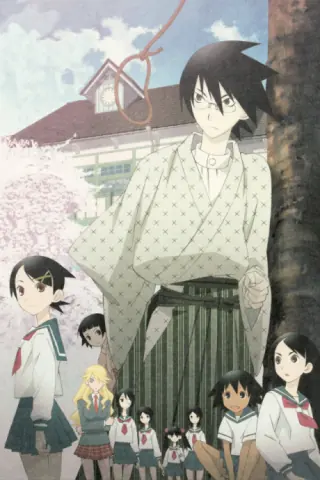
Sayonara, Zetsubou-Sensei
さよなら絶望先生
A teacher who despairs at everything, and the class that despairs at him.
- You hear
- Kanji jokes, name puns, topical satire and blackboard text you are meant to read at speed. Much of it cannot be translated at all.
- Watch out
- The hardest listening on this page. Fluent viewers miss jokes.
Frequently asked questions
Can you learn Japanese from anime?
You can build listening and vocabulary from it, but not grammar you have never studied. Anime works as the hours of input that turn words you already know into words you recognise at speed. Keep the textbook for the rules and use a show to hear them used.
What anime is best for a complete beginner?
Slow, contemporary slice of life with short sentences: Shirokuma Cafe, Flying Witch, Non Non Biyori, or Folktales from Japan, which is narrated for Japanese children in clear standard speech.
Should I use Japanese subtitles or English ones?
Japanese subtitles once you can read at N4 or so, because they let you catch a word you half-heard and look it up. English subtitles below that, since you will otherwise read instead of listen. A third pass with no subtitles at all is where the listening gain actually comes from.
Is anime Japanese rude or unnatural?
Some of it. Shounen and comedy lean on rough forms like だろ and じゃねえ that are fine to understand and wrong to use with a stranger. Workplace shows such as Shirobako and service-counter shows such as The Devil is a Part-Timer carry the polite register the JLPT actually tests.
How were these picked?
Started from an episode-rating chart of 183 shows, then judged each one on clarity of delivery, how much the vocabulary repeats, and whether the register is worth copying. 42 made it, sorted into four difficulty bands.