
わたしは、今日、友だちと 買い物に 行きました。3か月前に 見た えいがの DVDが ほしかったからです。買った DVDは、友だちや 姉と いっしょに 見ます。
-
1.「わたし」は 今日、何を しましたか。
Show answer
Answer: 2. 友だちと DVDを 買いに 行きました。
The passage states 「わたしは、今日、友だちと 買い物に 行きました」(Today I went shopping with a friend) and explains the reason was to buy a DVD of a movie seen 3 months ago (「3か月前に 見た えいがの DVDが ほしかったからです」). Option 2 correctly captures that the writer went with a friend to buy a DVD.
- 買い物(かいもの) — shopping
- DVD(ディーブイディー) — DVD (digital video disc)
- ほしかった — wanted (past tense of ほしい)
- 姉 — older sister
森さんの 机の 上に、山口先生の メモと 本が あります。
森さん
クラスで 使う 本を 中川先生に かりました。
5ページを 25枚 コピーして ください。
コピーは 南さんに わたして ください。
本は、わたしが あした かえしますから、わたしの 机の 上に おいて ください。
山口
-
2.森さんは コピーを した あとで、本を どうしますか。
Show answer
Answer: 4. 山口先生の 机の 上に おきます。
The memo from Yamaguchi-sensei says: 「本は、わたしが あした かえしますから、わたしの 机の 上に おいて ください」(I will return the book tomorrow, so please put it on my desk). The question asks what Mori-san will do with the book AFTER making copies. The correct answer is option 4: place the book on Yamaguchi-sensei's desk. Note that わたし (my) in the memo refers to Yamaguchi-sensei, the memo's writer, so 'my desk' means Yamaguchi-sensei's desk.
- メモ(めも) — memo, note
- コピー(こぴー) — copy, photocopy
- わたして — hand over, deliver (te-form of わたす)
- かえします — will return (from かえす)
- おいて — put, place (te-form of おく)
- あとで — after (doing something)
きのうの 夜は おそくまで しごとを しました。とても つかれました。しごとの あと、電車で 帰りました。
家の 近くの 駅で 電車を おりました。外は 雨でしたが、わたしは かさが ありませんでした。とても こまりました。
駅の 人が わたしを 見て、「あの はこの 中の かさを 使って ください。」と言いました。はこの 中には かさが 3本 ありました。
わたしは「えっ、いいんですか。」と 聞きました。
駅の 人は「あれは みなの かさです。お金は いりません。あした、あの はこに かえして ください。」と言いました。
わたしは「わかりました。ありがとうございます。」と言って、かさを かりて 帰りました。
-
3.どうして こまりましたか。
Show answer
Answer: 4. かさが なかったから
The question asks why the narrator was troubled (どうして こまりましたか). In the passage, right after getting off the train, it says: 「外は 雨でしたが、わたしは かさが ありませんでした。とても こまりました。」(It was raining outside, but I didn't have an umbrella. I was very troubled.) This directly states the reason: it was raining and the narrator had no umbrella. Option 4, 「かさが なかったから」(because (I) didn't have an umbrella), matches this perfectly.
- こまる — to be troubled, to be in a difficult situation
- かさ — umbrella
- おりる — to get off (a train, bus, etc.)
- つかれる — to get tired
-
4.「わたし」は あした どうしますか。
Show answer
Answer: 3. かさを はこの 中に 入れます。
The question asks what 'わたし' (the narrator) will do tomorrow. The station worker said: 「あした、あの はこに かえして ください。」(Tomorrow, please return (it) to that box.) The narrator responded: 「わかりました。」(Understood.) So tomorrow the narrator will return the borrowed umbrella to the box. Option 3, 「かさを はこの 中に 入れます」(put the umbrella in the box), correctly describes this action. The verb かえす (to return) here means putting the umbrella back into the box.
- かえす — to return something
- はこ — box
- いれる — to put in, to insert
- わたす — to hand over, to pass to someone
- みんなのかさ — everyone's umbrella (shared/community umbrella)
-
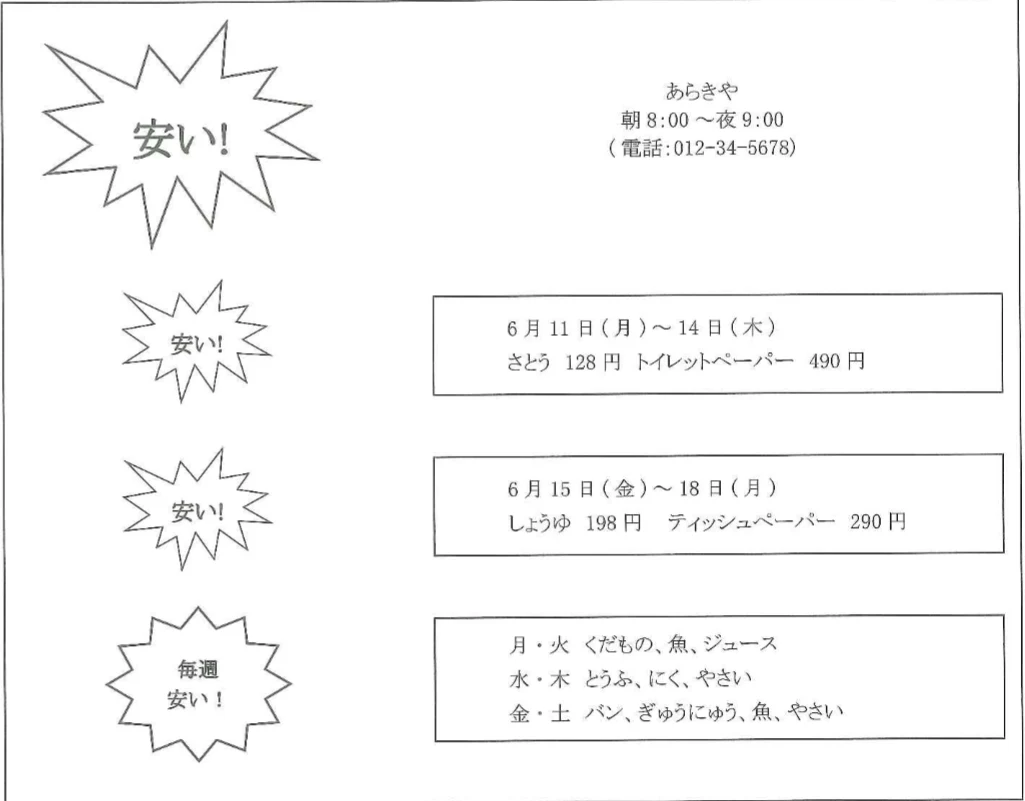
5.あきらやで トイレットペーパーと にくと やさいを 同じ 日に 買いたいです。いつが 安いですか。
Show answer
Answer: 2. 6月13日(水)と14日(木)
The question asks which day(s) all three items — トイレットペーパー (toilet paper), にく (meat), and やさい (vegetables) — are cheap at the same time. From the flyer: トイレットペーパー is on sale during 6月11日(月)〜14日(木). Under [毎週安い!] (cheap every week), にく and やさい are cheap on 水・木 (Wednesday and Thursday). Looking at the calendar: 6月13日 is 水 (Wednesday) and 6月14日 is 木 (Thursday) — both fall within the 6/11–6/14 toilet paper sale period AND are days when meat and vegetables are cheap. So option 2 is correct.
- 安い — cheap, inexpensive
- 毎週 — every week
- 同じ日(おなじひ) — same day
- 買いたい — want to buy
- トイレットペーパー(といれっとぺーぱー) — toilet paper
- にく — meat
- やさい — vegetables
- さとう — sugar
- しょうゆ — soy sauce
- ティッシュペーパー(てぃっしゅぺーぱー) — tissue paper
- くだもの — fruit
- 魚 — fish
- ジュース(じゅーす) — juice
- とうふ — tofu
- パン(ぱん) — bread
- ぎゅうにゅう — milk
Explanations are AI-generated and are sometimes not accurate. Spotted a mistake in a question or answer? Write to us at hello@practicejlpt.com and we’ll fix it.