
N2 Mock test 1
Mixed papers
Set aside 2 hours 30 minutes
Two timed sections in one sitting. Once a section ends you can't go back to it. Have headphones ready for the listening.
- Vocabulary, Grammar & Reading105 min · 75 questions
- Listening45 min · 27 questions
Vocabulary, Grammar & Reading 105 min · 75 questions
問題1漢字読み
_____の言葉の読み方として最もよいものを、1・2・3・4から一つ選びなさい。
-
1.二人は離れて座った。
From the Dec 2018 paper
Show answer
Answer: 1. はなれて
離れる (はなれる)'to be apart', kun'yomi はな, not on'yomi リ
二人は離れて座った。
The two of them sat apart.
離れて is the te-form of 離れる, the kun'yomi verb meaning to be physically separated or apart. The clue is 座った, which describes where they sat, so the sentence needs a word for physical distance between seats.
Remember
離れる is kun'yomi はな, while the on'yomi リ appears in 距離, meaning distance. When 離 describes people or places apart, expect はな.
Why not the others
Words
- 離れるto be apart, to separate
- 座るto sit
- 二人two people
-
2.何か良い企画はありますか。
From the Dec 2018 paper
Show answer
Answer: 2. きかく
企画 (きかく)'plan, project', on'yomi キ + カク
何か良い企画はありますか。
Do you have any good plans or proposals?
企画 is an on'yomi compound meaning a plan or project, with 企 and 画. The clue is 何か良い, asking for an idea or proposal, which calls for this business noun.
Remember
画 has two on'yomi: ガ in 映画 and 漫画, and カク in 計画 and 企画. If the word means a plan, expect カク.
Why not the others
Words
- 企画plan, project
- 何かsomething
-
3.再度確認をお願いします。
From the Dec 2018 paper
Show answer
Answer: 2. さいど
再度 (さいど)'again, a second time', on'yomi サイ + ド
再度確認をお願いします。
Please check again.
再度 is an on'yomi compound meaning once more, with 再 and 度. The clue is 確認をお願いします, a request to repeat a check, and the reading has a short ド with no voicing and no long vowel.
Remember
再 is always サイ, never ザイ: 再会, 再生, 再度. Watch for short 度 in 一度 and 今度.
Why not the others
Words
- 再度again, a second time
- 確認confirmation, check
-
4.とても和やかなパーティーだった。
From the Dec 2018 paper
Show answer
Answer: 3. なごやか
和やか (なごやか)'peaceful, harmonious', na-adjective, reading なご
とても和やかなパーティーだった。
It was a very warm and friendly party.
和やか is a na-adjective meaning warm, peaceful and harmonious, used for the atmosphere of a gathering. The clue is パーティー with とても, describing a friendly mood among people.
Remember
Learn the やか na-adjectives as a set: 和やか harmonious, 穏やか calm, 爽やか fresh, 賑やか lively. The exam often swaps them.
Why not the others
Words
- 和やかpeaceful, harmonious, friendly
- パーティーparty
-
5.コンピュータでデータを処理した。
From the Dec 2018 paper
Show answer
Answer: 4. しょり
処理 (しょり)'to process, handle', on'yomi ショ + リ
コンピュータでデータを処理した。
I processed the data on the computer.
処理 is an on'yomi compound with 処 and 理, meaning to process or deal with something. The clues コンピュータで and データを point to handling data, which is exactly 処理する.
Remember
Keep the り trio apart: 処理 process, 修理 repair, 勝利 victory. Short ショ plus リ means process.
Why not the others
Words
- 処理processing, handling
- データdata
- コンピュータcomputer
問題2表記
_____の言葉を漢字で書くとき、最もよいものを1・2・3・4から一つ選びなさい。
-
6.明日10時にむかえに行きます。
From the Dec 2018 paper
Show answer
Answer: 3. 迎え
迎える (むかえる)'to go to meet, pick up', 迎 means welcome
明日10時に迎えに行きます。
I will go to pick you up at 10 o'clock tomorrow.
The clue is に行きます after むかえ, which shows movement to meet someone and bring them back. むかえる in this sense is always written 迎える, where 迎 means to welcome or receive on arrival.
Remember
Spot 迎 with the movement part for meeting on arrival. Keep it apart from 招 for invitation and 紹 for introduction.
Why not the others
Words
- 迎えるto go to meet, pick up
- 明日tomorrow
-
7.坂本さんはかいごの仕事をしている。
From the Dec 2018 paper
Show answer
Answer: 2. 介護
介護 (かいご)'caregiving', 介 help plus 護 protect
坂本さんは介護の仕事をしている。
Ms. Sakamoto does caregiving work.
The clue is 仕事をしている for daily life support work, the set phrase 介護の仕事 for a care worker. 介護 combines 介 for helping between people and 護 for protection, the standard spelling for long term care.
Remember
Remember 護 for protection in 介護 and 看護. Keep them apart by the first kanji: 介 for help in daily care, 看 with 目 eye for medical watching. 穫 is only for harvest.
Why not the others
Words
- 介護nursing care, caregiving
- 仕事work, job
- 看護nursing (medical)
-
8.カップや皿を同じけいとうの色でそろえた。
From the Dec 2018 paper
Show answer
Answer: 1. 系統
系統 (けいとう)'system, family, type', 系 line plus 統 unify
カップや皿を同じ系統の色でそろえた。
I matched the cups and plates in colors from the same family.
The clue is 同じ...の色でそろえた, to arrange in the same color group. 系統 means things belonging to the same line or group, so 同じ系統の色 means colors of the same family.
Remember
Spot 系統 for line plus unify, meaning group or lineage. Keep it apart from 形態 for physical shape and 等 for equal rank.
Why not the others
Words
- 系統system, family, lineage
- 皿plate, dish
- そろえるto arrange uniformly, match
-
9.古い新聞や本をひもでたばねた。
From the Dec 2018 paper
Show answer
Answer: 4. 束ねた
束ねる (たばねる)'to bundle together', written with 束 bundle
古い新聞や本をひもで束ねた。
I tied up the old newspapers and books with string.
The clues are ひもで, with string, and 古い新聞や本を, many flat objects as the target. たばねる means to gather many things into one bundle, and it is written with 束, which itself means bundle.
Remember
Remember 束ねる for making one bundle from many items. Keep it apart from 結ぶ for tying a knot, 包む for wrapping, and 収める for storing.
Why not the others
Words
- 束ねるto bundle, tie together
- ひもstring, cord
- 新聞newspaper
-
10.出張後、費用のせいさんをした。
From the Dec 2018 paper
Show answer
Answer: 3. 精算
精算 (せいさん)'settling expenses', 精 precise plus 算 calculate
出張後、費用の精算をした。
After the business trip, I settled the expenses.
The clues are 出張後, after a business trip, and 費用の...をした, doing something with costs. 精算 means calculating in detail to settle what was paid, written with 精 for precise and 算 for calculate.
Remember
Spot 算 for calculation and learn the first kanji by meaning: 精 precise for detailed settlement, 請 request for billing, 製 make for products, 制 control for rules.
Why not the others
Words
- 精算settlement of accounts
- 出張business trip
- 費用expenses, cost
問題3語形成
( )に入れるのに最もよいものを、1・2・3・4から一つ選びなさい。
-
11.( )計画のまま始めるのはやめたほうがいい。
From the Dec 2018 paper
Show answer
Answer: 3. 無
無計画'unplanned', 無 means 'without' plus a noun
無計画のまま始めるのはやめたほうがいい。
You should not start while you still have no plan.
The blank plus 計画 must mean lacking a plan. 無 attaches to a noun to mean 'without, lacking', so 無計画 means 'no plan'. The clue のまま shows the state continues into 始める, and やめたほうがいい warns against starting in that state.
Remember
無 plus noun means 'without': 無関心, 無責任, 無料. Contrast with 不 for negation of adjectives and 非 for category exclusion.
Why not the others
Words
- 計画plan
- 始めるto start something
-
12.怪しいメールが届いたときには、メールの送信( )を確認するようにしている。
From the Dec 2018 paper
Show answer
Answer: 1. 元
送信元'sender, source', 元 means 'origin, source'
怪しいメールが届いたときには、メールの送信元を確認するようにしている。
When a suspicious email arrives, I always check the sender of the email.
The clue is 怪しいメール and 確認する. You check who sent it. 元 means origin or source, and 送信元 is the set word for the sender address or source of a transmission.
Remember
元 read もと after a noun means source: 送信元, 発信元, 仕入元. Spot 元 when the sentence asks where something came from.
Why not the others
Words
- 怪しいsuspicious
- 届くto arrive
- 送信transmission, sending
- 確認confirmation, check
-
13.この国では農家の働き( )が減少している。
From the Dec 2018 paper
Show answer
Answer: 2. 手
働き手'worker', 手 after the masu-stem means 'person who does'
この国では農家の働き手が減少している。
In this country, the number of farm workers is decreasing.
The clue is 農家 and 減少している. The sentence needs people who work on farms and whose number is falling. 働き is the masu-stem of 働く, and 手 after a masu-stem means the person who does that action, so 働き手 means worker.
Remember
Masu-stem plus 手 means doer: 書き手, 話し手, 聞き手, 売り手. Spot this 手 when the sentence counts people.
Why not the others
Words
- 農家farm household, farmer
- 減少decrease
- 働くto work
-
14.この動物は、敵に襲われると、体をボール( )に丸めて身を守る。
From the July 2021 paper
Show answer
Answer: 3. 状
〜状'shaped like ~', suffix that attaches to a noun
この動物は、敵に襲われると、体をボール状に丸めて身を守る。
When attacked by an enemy, this animal curls its body into a ball shape to protect itself.
The answer ボール状 means ball-shaped. The deciding clue is 丸めて, to curl or roll up, which describes the physical shape of the body. The suffix 状 attaches to a noun like ボール and, with に, describes the manner or shape of an action.
Remember
Spot 状 after a noun for shape or state: 球状 (spherical), 帯状 (band-shaped) and 波状 (wavy). Contrast with 性 for inherent quality and 式 for system or ceremony.
Why not the others
Words
- 敵enemy
- 襲われるto be attacked
- 丸めるto curl up, roll up
- 身を守る(みをまもる)to protect oneself
-
15.明日のシンポジウムは( )会場で行われるので、ご注意ください。
From the July 2021 paper
Show answer
Answer: 3. 別
別-[べつ]'separate, different', prefix before a noun
明日のシンポジウムは別会場で行われるので、ご注意ください。
Tomorrow's symposium will be held at a different venue, so please take note.
The answer 別会場 means a separate or different venue. The deciding clue is ご注意ください, which warns of a change from what listeners expect. The prefix 別- attaches to the noun 会場 to show it is not the original place.
Remember
Learn 別- as a separate item or place: 別人 (another person), 別売り (sold separately) and 別料金 (separate charge).
Why not the others
Words
- 会場venue
- 行われるto be held
- 注意caution, attention
問題4文脈規定
( )に入れるのに最もよいものを、1・2・3・4から一つ選びなさい。
-
16.このスーパーは店の前に車をとめる( )がない。
From the Dec 2018 paper
Show answer
Answer: 1. スペース
スペース'space, room', used in 車をとめるスペース for parking space
このスーパーは店の前に車をとめるスペースがない。
This supermarket has no space to park cars in front of the store.
The clue is 車をとめる in front of the store. That calls for a word meaning empty room or area. スペース means a physical space or gap, and 車をとめるスペースがない is the standard way to say there is no room to park.
Remember
Remember 車をとめるスペース and 駐車スペース as set phrases for parking space. Do not confuse スペース (empty area) with フロア (indoor floor).
Why not the others
Words
- 店store, shop
- とめるto park, to stop a vehicle
-
17.エレベーターに異常がないか、定期的に( )している。
From the Dec 2018 paper
Show answer
Answer: 4. 点検
点検する'to inspect equipment', used for checking for 異常 regularly
エレベーターに異常がないか、定期的に点検している。
They regularly inspect the elevator to check that there is nothing wrong with it.
The clues are エレベーターに異常がないか and 定期的に. The sentence is about checking machinery for faults on a regular basis. 点検する means to inspect equipment or facilities, which fits that checking action.
Remember
Separate 点検 (machines and facilities), 検診 (human health), and 観測 (weather and nature). The kanji 点 points to a maintenance check.
Why not the others
Words
- 異常abnormality, problem
- 定期的regular, periodic
- エレベーター(えれべーたー)elevator
-
18.カメラを向けると、子どもたちは( )笑った。
From the Dec 2018 paper
Show answer
Answer: 2. にっこり
にっこり'with a broad smile', used in にっこり笑う
カメラを向けると、子どもたちはにっこり笑った。
When the camera was pointed at them, the children smiled brightly.
The clue is 笑った after the blank, plus カメラを向ける. The blank needs an onomatopoeia describing how someone smiles. にっこり describes a bright, beaming smile, and にっこり笑う is a fixed collocation.
Remember
Learn smile words together: にっこり for a single bright smile and にこにこ for smiling continuously. Both pair with 笑う.
Why not the others
Words
- 向けるto point, to turn toward
- 子どもchild
-
19.今日の海は波が高く、船が揺れたせいで、気分が悪くなる人が( )した。
From the Dec 2018 paper
Show answer
Answer: 2. 続出
続出する'to occur one after another', for people or problems appearing
今日の海は波が高く、船が揺れたせいで、気分が悪くなる人が続出した。
The sea was rough today, and because the boat rocked, people feeling sick appeared one after another.
The clues are 人が...した and 気分が悪くなる人が, showing many people becoming sick. 続出する means cases or people emerge in succession. The cause せいで with high waves explains why sick people kept appearing.
Remember
続出 is for many bad things appearing in a row, as in 被害が続出する. The other three with 続 or 継 are about one thing continuing.
Why not the others
Words
- 波wave
- 揺れるto rock, to sway
- 気分feeling, mood
- 続出appearing one after another
-
20.料理中にくしゃみをしたら、小麦粉が( )しまった。
From the Dec 2018 paper
Show answer
Answer: 3. 飛び散って
飛び散る'to scatter', for powder or liquid flying in all directions
料理中にくしゃみをしたら、小麦粉が飛び散ってしまった。
While I was cooking, I sneezed and the flour scattered everywhere.
The clues are 小麦粉が and くしゃみをしたら. Flour is a powder, so a sneeze makes it fly in all directions. 飛び散る combines 飛ぶ (to fly) with 散る (to scatter), which describes powder or drops spreading around. The てしまった ending shows an unfortunate result.
Remember
Learn 飛び compounds by the second verb: 散る for scattering, 立つ for taking off, 上がる for jumping up, 降りる for jumping down.
Why not the others
Words
- 小麦粉flour
- くしゃみsneeze
- 料理中while cooking
-
21.私は大学を卒業したら、( )に戻って実家の近くで就職したいと思う。
From the Dec 2018 paper
Show answer
Answer: 1. 地元
地元'home town, local area', used with 戻る, 帰る, 就職する
私は大学を卒業したら、地元に戻って実家の近くで就職したいと思う。
After I graduate from university, I want to go back to my hometown and find a job near my family home.
The deciding clues are に戻って and 実家の近くで就職したい. The speaker talks about returning to a place and working near the family home after graduation. 地元 means the town or area where one grew up, so it is the only word that names that place.
Remember
Separate place from base: 地元 is your home area, 実家 is your parents' house. 土台 is a foundation, 根元 is a plant root, 立場 is a standpoint.
Why not the others
Words
- 卒業graduation
- 実家parents' home, family home
- 就職finding employment, getting a job
-
22.中野さんは味に( )で、調味料が少し変わっただけで違いがわかるらしい。
From the Dec 2018 paper
Show answer
Answer: 4. 敏感
味に敏感'sensitive to taste', notices even a small change
中野さんは味に敏感で、調味料が少し変わっただけで違いがわかるらしい。
Nakano is sensitive to taste, and apparently can tell the difference when just the seasoning changes a little.
The clue is 調味料が少し変わっただけで違いがわかる, which describes noticing a very small difference. 味に敏感で means having a sense of taste that reacts to small stimuli. The second clause explains exactly that kind of sensitivity.
Remember
Use 敏感 for senses that catch small stimuli: 味に敏感, 音に敏感. Keep 機敏 for quick movements, 急激 for sudden sharp changes, 過激 for radical words and actions.
Why not the others
Words
- 味taste, flavor
- 調味料seasoning, condiment
- 違いdifference
問題5言い換え類義
_____の言葉に意味が最も近いものを、1・2・3・4から一つ選びなさい。
-
23.この機械を扱うには、特別なテクニックが必要だ。
From the Dec 2018 paper
Show answer
Answer: 1. 技術
テクニック'technique, skill', same as 技術
この機械を扱うには、特別なテクニックが必要だ。
You need a special technique to operate this machine.
テクニック means a practical skill or technique for doing something, often for operating equipment. The clue 扱う ('to handle, operate') with 必要だ points to a required skill, not just information. Therefore 技術 ('technique, skill') is the closest match.
Remember
Pair テクニック with 技術 for 'technique'. Keep it apart from 知識 ('factual knowledge'), 工夫 ('clever device') and 訓練 ('training process').
Why not the others
Words
- 機械machine
- 扱うto handle, operate
- 特別special
-
24.青木さんはしばらく黙ってうつむいていた。
From the Dec 2018 paper
Show answer
Answer: 3. 下を向いて
うつむく'to look down', same as 下を向いて
青木さんはしばらく黙ってうつむいていた。
Aoki was silent for a while, looking down.
うつむく means to lower the face and direct the eyes downward. The clue 黙って ('in silence') with ていた describes the posture kept during that silence. Therefore 下を向いて ('with the face turned down') is the closest match.
Remember
Remember うつむく as 'head down' and pair it with 下を向く. The opposite direction is 上を向く.
Why not the others
Words
- しばらくfor a while
- 黙るto be silent
- うつむくto look down
-
25.この犬は、本当に利口な犬ですね。
From the Dec 2018 paper
Show answer
Answer: 2. 頭がいい
利口な'clever, smart', same as 頭がいい
この犬は、本当に利口な犬ですね。
This dog is really smart, isn't it?
利口な means clever and quick to understand, used for people, children and animals. The clue 本当に praises the dog[いぬ], so the sentence is about intelligence. Therefore 頭がいい ('smart, bright') is the closest match.
Remember
Pair 利口な with 頭がいい and 賢い for 'smart'. Keep them apart from words for looks or energy like かわいい, かっこいい and 元気な.
Why not the others
Words
- 利口clever, smart
- 本当にreally, truly
-
26.もう少し用心したほうがいいんじゃないですか。
From the Dec 2018 paper
Show answer
Answer: 4. 気をつけた
用心する'to be careful', same as 気をつける
もう少し用心したほうがいいんじゃないですか。
Shouldn't you be a bit more careful?
用心する means to be cautious and watch out to avoid danger or mistakes. The clue もう少し with ほうがいい gives advice to increase that caution. Therefore 気をつけた ('was careful, watched out') is the closest match.
Remember
Pair 用心する with 気をつける and 注意する for 'be careful'. Spot it in advice patterns like ほうがいい.
Why not the others
Words
- 用心caution, care
- もう少し(もうすこし)a little more
-
27.説明がくどくてすみません。
From the Dec 2018 paper
Show answer
Answer: 4. しつこくて
くどい'long-winded, repetitive', same as しつこい
説明がくどくてすみません。
Sorry my explanation was so long-winded.
くどい means wordy, repetitive or persistent to an annoying degree. The clue 説明が with すみません is an apology for the manner of speaking. Therefore しつこくて ('persistent, long-winded') is the closest match.
Remember
Pair くどい with しつこい for talk that drags on or repeats. Keep them apart from つまらない ('boring'), 下手 ('unskillful') and 複雑 ('complicated').
Why not the others
Words
- 説明explanation
- くどいlong-winded, repetitive
- しつこいpersistent, insistent
問題6用法
次の言葉の使い方として最もよいものを、1・2・3・4から一つ選びなさい。
-
28.保存
From the Dec 2018 paper
Show answer
Answer: 3. この食品は必ず冷蔵庫で保存してください。
保存 (ほぞん)'preserve, store to keep unchanged', for food, data, records
この食品は必ず冷蔵庫で保存してください。
Please be sure to keep this food stored in the refrigerator.
保存 means to keep something in its present good condition so it does not spoil, decay or get lost. The clues この食品 and 冷蔵庫で show the purpose is cold storage to prevent spoiling, which is the central use of 保存.
Remember
Use 保存 for keeping food, files, specimens or records unchanged. For money use 貯金, for seats use 確保, for stamina use 温存.
Why not the others
Words
- 保存preservation, storage
- 冷蔵庫refrigerator
- 食堂cafeteria, dining hall
- 体力physical strength, stamina
-
29.鈍い
From the Dec 2018 paper
Show answer
Answer: 4. 疲れているのか、彼はいつもより動きが鈍い。
鈍い (にぶい)'sluggish, dull', for movement, reactions, blades
疲れているのか、彼はいつもより動きが鈍い。
Perhaps because he is tired, his movements are more sluggish than usual.
鈍い describes something dull or slow to respond, such as 動きが鈍い, 反応が鈍い or a dull blade. The clue 動きが plus the comparison いつもより points to sluggish physical movement, which matches 鈍い.
Remember
Keep 鈍い for dullness: 動きが鈍い, 反応が鈍い, 包丁が鈍い, 頭の回転が鈍い. For general slowness of work, calculation or time, use 遅い.
Why not the others
Words
- 鈍いdull, sluggish
- 計算calculation
- 丁寧careful, polite
- 動きmovement
-
30.日課
From the Dec 2018 paper
Show answer
Answer: 4. 健康のため、毎朝30分体操することを日課にしている。
日課 (にっか)'daily routine', something done every day as a habit
健康のため、毎朝30分体操することを日課にしている。
For my health, I make 30 minutes of exercise every morning my daily routine.
日課 means a task a person does every day as a fixed habit. The clues 毎朝30分 and 日課にしている show a personal habit repeated daily, which is the standard pattern 日課にする.
Remember
日課 is your own repeated daily task, used as 日課にする or 日課にしている. Do not confuse it with 時刻表 for timetables, 規則 for rules, or ノルマ for quotas.
Why not the others
Words
- 日課daily routine
- 停留所bus stop
- 売り上げ(うりあげ)sales
- 出社coming to work
- 体操exercise, gymnastics
-
31.多彩
From the Dec 2018 paper
Show answer
Answer: 1. 高橋氏は、小説家や画家として多彩な活動を行っている。
多彩 (たさい)'varied, many-sided', as 多彩な + noun for talents, activities
高橋氏は、小説家や画家として多彩な活動を行っている。
Mr. Takahashi carries out varied activities as both a novelist and a painter.
多彩 means having many different kinds or talents, used as 多彩な plus a noun like 活動, 才能 or 顔ぶれ. The clue 小説家や画家として shows two different fields, so 多彩な活動 correctly expresses variety of activity.
Remember
Use 多彩な for a range of types: 多彩な才能, 多彩な活動, 多彩な番組. It does not describe light, degree of help, or vague meaning.
Why not the others
Words
- 多彩varied, diverse
- 小説家novelist
- 画家painter
- 輝くto shine
- 曖昧vague, ambiguous
-
32.乗り継ぐ
From the Dec 2018 paper
Show answer
Answer: 3. バスと電車を乗り継いで、やっと目的地に着いた。
乗り継ぐ (のりつぐ)'transfer vehicles to continue a trip', buses, trains, planes
バスと電車を乗り継いで、やっと目的地に着いた。
I transferred between buses and trains and finally arrived at my destination.
乗り継ぐ means to change from one vehicle to another to continue the same journey. The clues バスと電車を plus やっと目的地に着いた show a trip completed by using two kinds of transport in succession.
Remember
Use 乗り継ぐ for transfers: 電車を乗り継ぐ, 飛行機を乗り継ぐ. Contrast 乗り過ごす for riding past your stop and 引き継ぐ for taking over a job.
Why not the others
Words
- 乗り継ぐ(のりつぐ)to transfer vehicles
- 目的地destination
- 居眠りdozing off
- 運転driving
問題7文法形式の判断
次の文の( )に入れるのに最もよいものを、1・2・3・4から一つ選びなさい。
-
33.あの人は、人の意見を聞き( )しないで、自分の主張ばかりする。
From the Dec 2018 paper
Show answer
Answer: 2. も
聞きもしないで'without even listening', masu-stem + もしないで
あの人は、人の意見を聞きもしないで、自分の主張ばかりする。
That person does not even listen to other people's opinions and just pushes his own claims.
The second clause 自分の主張ばかりする criticizes the person for pushing only his own view. That context calls for 'does not even listen'. も after the masu-stem 聞き adds 'even' to しないで, giving 聞きもしないで, 'without even listening'.
Remember
Remember masu-stem + もしないで as a set meaning 'without even doing': 見もしないで, 読みもしないで. It is stronger than nai-form + で, like 聞かないで, which only means 'without doing'.
Why not the others
Words
- 意見opinion
- 主張claim, assertion
-
34.さっき、買い物( )、コンビニに寄ってATMでお金を下ろしてきた。
From the Dec 2018 paper
Show answer
Answer: 3. のついでに
のついでに'on the same occasion, also do', noun + のついでに
さっき、買い物のついでに、コンビニに寄ってATMでお金を下ろしてきた。
A little while ago, while I was out shopping, I stopped by a convenience store and withdrew money from the ATM.
The sentence has a main errand 買い物 and a second action 寄ってATMでお金を下ろす done on the same trip. のついでに after a noun expresses that 'while doing A, also do B' relation. さっき shows this is a report of what the speaker actually did.
Remember
のついでに follows the noun for the main errand and adds a secondary action done on the same trip: 買い物のついでに, 散歩のついでに. Spot a main action plus a 'while I am at it' second action.
Why not the others
Words
- 買い物(かいもの)shopping
- 寄るto stop by
- 下ろすto withdraw money
-
35.(テレビ番組で)「私たちが住んでいる地球は、( )どうやってできたのでしょうか。地球誕生の秘密を見てみましょう。」
From the Dec 2018 paper
Show answer
Answer: 4. いったい
いったい'on earth', emphasizes wh-questions like どうやって
(テレビ番組で)「私たちが住んでいる地球は、いったいどうやってできたのでしょうか。地球誕生の秘密を見てみましょう。」
How on earth was the Earth we live on created? Let's take a look at the secret of the birth of the Earth.
The program introduction asks どうやってできたのでしょうか about the mystery of Earth's birth. That is an open wh-question asking how. いったい strengthens wh-words like いったい何 and いったいどうやって to show curiosity or surprise.
Remember
いったい pairs with interrogatives to ask 'what on earth, how on earth': いったいなぜ, いったい誰. Keep it apart from おそらく for guesses, とうとう for final results, and まもなく for 'soon'.
Why not the others
Words
- 地球the Earth
- 誕生birth, creation
- 秘密secret
-
36.X社の調査によると、共働き夫婦における夫の家事負担の割合は、夫の年齢が( )にしたがって増加しているという。
From the Dec 2018 paper
Show answer
Answer: 1. 下がる
にしたがって'as ~, ...', after dictionary form for parallel change
X社の調査によると、共働き夫婦における夫の家事負担の割合は、夫の年齢が下がるにしたがって増加しているという。
According to a survey by Company X, among dual-income couples, the husband's share of housework increases as the husband's age goes down.
にしたがって after a verb shows two changes moving together. It requires the dictionary form before it, so 下がるにしたがって means 'as age gets lower'. The main clause 増加している gives the linked result, younger age paired with a larger share.
Remember
For parallel change, use dictionary form + にしたがって, につれて or とともに, even when the main clause is ている: 下がるにしたがって増加している. Te-iru, ta-form and te-ita forms do not fit the 'as' slot.
Why not the others
Words
- 調査survey
- 共働きdual-income couple
- 割合proportion, share
- 負担burden
- 増加increase
-
37.12月に入り、インフルエンザの患者数は増える( )。
From the Dec 2018 paper
Show answer
Answer: 3. 一方だ
増える一方だ'keeps increasing', dictionary form + 一方だ
12月に入り、インフルエンザの患者数は増える一方だ。
Now that December has begun, the number of influenza patients just keeps increasing.
12月に入り sets a time point from which a trend continues. 増える is a change verb in dictionary form. 一方だ after the dictionary form means the change keeps going one way, so 増える一方だ means 'keeps increasing'.
Remember
Dictionary form + 一方だ means one-way continuation: 増える一方だ, 減る一方だ. Do not confuse it with 一方で, which means 'on the other hand' for contrast.
Why not the others
Words
- 患者patient
- インフルエンザ(いんふるえんざ)influenza
-
38.野党の追及に対し、大臣は満足な回答ができなかったどころか、質問の内容( )理解できていなかった。
From the July 2021 paper
Show answer
Answer: 1. すら
すら'even', marks an extreme example, after a noun with a negative predicate
野党の追及に対し、大臣は満足な回答ができなかったどころか、質問の内容すら理解できていなかった。
When pressed by the opposition, the minister not only failed to give a satisfactory answer, he had not even understood the content of the questions.
The clue is どころか, which means 'far from' and sets up an escalation to something more extreme. The second clause is negative, 理解できていなかった, and says even the basic understanding was missing. すら marks 質問の内容 as that extreme example, giving the meaning 'even the content of the questions'.
Remember
After どころか, expect すら or さえ to add the more extreme case: 'not A, let alone even B'. Reserve のみ for limitation and こそ for singling out 'precisely this'.
Why not the others
Words
- 野党opposition party
- 追及pressing, questioning
- 大臣minister
- 満足なsatisfactory
-
39.最近( )パソコンの調子がおかしい。この状態が続くようだったら一度修理に出したほうがよさそうだ。
From the July 2021 paper
Show answer
Answer: 3. どうも
どうも'somehow, seems', for a vague uneasy feeling when the cause is unclear
最近どうもパソコンの調子がおかしい。この状態が続くようだったら一度修理に出したほうがよさそうだ。
For some reason my computer has been acting strangely lately. If this condition continues, I had better take it in for repair.
The clue is 調子がおかしい, a vague symptom whose cause the speaker cannot pin down. The next sentence only guesses with ようだったら and よさそうだ. どうも expresses that uncertain, uneasy feeling: 'somehow, it seems'.
Remember
Learn the partners: ちっとも needs a nai-form negative, いったい needs a question, まさか needs denial or shock, while どうも needs only a vague feeling or guess.
Why not the others
Words
- 調子condition, state
- おかしいstrange, wrong
- 状態condition, situation
- 修理repair
-
40.(広告で) 川西ピアノ教室では、初心者、経験者( )、どなたにでも丁寧に指導します。
From the July 2021 paper
Show answer
Answer: 2. を問わず
〜を問わず'regardless of', after nouns that name categories
川西ピアノ教室では、初心者、経験者を問わず、どなたにでも丁寧に指導します。
At Kawanishi Piano School, we give careful instruction to everyone, whether a beginner or an experienced player.
The clues are the two category nouns 初心者、経験者 and the phrase どなたにでも, 'to anyone'. The school makes no distinction between the groups. を問わず after those nouns expresses 'regardless of beginner or experienced status'.
Remember
Use を問わず when categories make no difference, and にもかかわらず when a result goes against expectation. Only を問わず follows a list like 初心者、経験者 to mean 'regardless of'.
Why not the others
Words
- 初心者beginner
- 経験者experienced person
- 丁寧にcarefully, politely
- 指導instruction, guidance
-
41.めったに出かけないのに、外出するとき( )大雨になる。
From the July 2021 paper
Show answer
Answer: 2. にかぎって
〜にかぎって'precisely when', for an unlucky coincidence limited to that time
めったに出かけないのに、外出するときにかぎって大雨になる。
Although I rarely go out, it pours with rain precisely when I do go out.
The clues are めったに with a negative, meaning 'rarely', plus のに, which sets up a contrast. The bad result 大雨になる happens limited to 外出するとき. にかぎって marks that ironic timing: 'just on those occasions'.
Remember
Use にかぎって for complaining about bad timing limited to one case. Use にあたって and に際して for formal occasions like ceremonies or starting a project.
Why not the others
Words
- めったにrarely, seldom
- 外出going out
- 大雨heavy rain
-
42.昨夜よく眠れなかった( )、体がだるい。
From the July 2021 paper
Show answer
Answer: 4. せいか
〜せいか'perhaps because of', after the plain form to guess at a cause
昨夜よく眠れなかったせいか、体がだるい。
Perhaps because I did not sleep well last night, my body feels heavy and sluggish.
The second clause 体がだるい is a present symptom, and the speaker is guessing at its cause. The か in せいか adds uncertainty, 'perhaps because'. It follows the plain past form 眠れなかった, which is the required form before せいか.
Remember
Use せい for a confident bad cause and せいか when you are guessing. Both follow the plain form, while からには must be followed by resolve or duty.
Why not the others
Words
- 昨夜last night
- 眠るto sleep
- 体body
- だるいsluggish, heavy
-
43.初めてこの町を訪れたが、不思議な( )、ずっと前からここに住んでいるような気がする。
From the July 2021 paper
Show answer
Answer: 1. ことに
不思議なことに'strangely, to my surprise', emotion phrase before a feeling
初めてこの町を訪れたが、不思議なことに、ずっと前からここに住んでいるような気がする。
I visited this town for the first time, but strangely, I feel as if I have lived here for a long time.
The second clause ずっと前からここに住んでいるような気がする expresses the speaker's feeling. 不思議なことに frames that feeling with surprise. The clue 不思議な is an emotion word, and ことに turns an adjective into a comment on the whole situation.
Remember
Use ことに after an emotion adjective to comment on a situation. Use のに or くせに for contrast against expectation, and うえに to add one more point in the same direction.
Why not the others
Words
- 不思議strange, mysterious
- 訪れるto visit
- ずっとall along, for a long time
-
44.(会社で) A「じゃ、来週の打ち合わせも水曜日でいいですか。」 B「あ、スケジュールを( )、ちょっとわからないので、あとで連絡します。」
From the July 2021 paper
Show answer
Answer: 2. 確認してみないと
〜てみないと'unless I try doing', てみる plus negative conditional
あ、スケジュールを確認してみないと、ちょっとわからないので、あとで連絡します。
Ah, I will not know unless I check my schedule, so I will contact you later.
The clues わからないので and あとで連絡します show B cannot answer now and must check first. てみる adds the meaning of trying an action to see, and ないと creates the unless condition. Together they give the reason for calling back later.
Remember
〜ないと means unless, and implies must when the result is negative. Add てみる when the necessary action is to try something and see the result.
Why not the others
Words
- 確認confirmation, check
- 連絡contact
- 打ち合わせ(うちあわせ)meeting, discussion
問題8文の組み立て
次の文の ★ に入る最もよいものを、1・2・3・4から一つ選びなさい。
-
45.山や植物の写真家_____ _____ _____ ★写真展が15日からABCデパートで開催される。
From the Dec 2018 paper
Show answer
Answer: 2. の
として'as', after a noun, plus の to link a person to 写真展
山や植物の写真家として有名な岩本まさき氏の写真展が15日からABCデパートで開催される。
A photo exhibition by Mr. Masaki Iwamoto, who is famous as a photographer of mountains and plants, will be held at ABC Department Store from the 15th.
The noun 写真家 before the blanks needs として to give the role, as a photographer. 有名な must modify the person 岩本まさき氏, and that person needs の to connect to 写真展 after the blanks. So the order is として, 有名な, 岩本まさき氏, の, with の in the ★ position.
Remember
Spot the chunk Nとして有名な person の work or event. として attaches to the job, の attaches to the work after the person.
Why not the others
Words
- 写真家photographer
- 有名なfamous
- 氏Mr., Ms. (formal)
- 写真展photo exhibition
- 開催されるto be held (passive)
-
46.子供のころは、1年が長く感じられたのに、年をとる_____ _____ ★ _____だろうか。
From the Dec 2018 paper
Show answer
Answer: 1. のは
につれて'as', after dictionary form, plus のはなぜだろうか to ask why
子供のころは、1年が長く感じられたのに、年をとるにつれて短く感じるようになるのはなぜだろうか。
When I was a child a year felt long, but why is it that as we get older we come to feel it as short?
年をとる before the blanks describes a gradual change, so it needs につれて. だろうか after the blanks needs the question word なぜ just before it. The long clause 短く感じるようになる is turned into a noun by のは so なぜ can ask about it, and のは is in the ★ position.
Remember
After a dictionary form verb of change, expect につれて. For why questions about a whole clause, expect Verb + のは + なぜ + だろうか.
Why not the others
Words
- 子供のころin childhood
- 年をとるto grow old
- 短くshort (adverbial form)
- 感じるto feel
- なぜwhy
-
47.情報をどのような_____ _____ ★ _____が変わってくるので、順番を意識して話す必要がある。
From the Dec 2018 paper
Show answer
Answer: 3. によって
によって'depending on', after Verb + か, result changes
情報をどのような順番で提示するかによって相手の受け止め方が変わってくるので、順番を意識して話す必要がある。
Because how the other person receives information changes depending on in what order you present it, you need to speak with the order in mind.
どのような before the blanks needs the noun 順番で. 提示するか is an embedded question and needs によって after it to mean depending on. が変わってくる after the blanks needs the subject 相手の受け止め方 just before it. So によって is ★ in blank 3.
Remember
Spot the chunk どのような N で Verb か によって. によって after か often means depending on, and the noun before が is the result.
Why not the others
Words
- 情報information
- 順番order, sequence
- 提示するto present
- 相手other person
- 受け止め方(うけとめかた)way of receiving
-
48.日本では、99歳のお祝いを「白寿」と言います。「百」の字から「一」をとる_____ _____ ★ _____そう呼ばれています。
From the Dec 2018 paper
Show answer
Answer: 2. 字になる
と〜字になることから'because it becomes the character ~', reason for a name
日本では、99歳のお祝いを「白寿」と言います。「百」の字から「一」をとると「白」という字になることからそう呼ばれています。
In Japan, the 99th birthday celebration is called Hakuju. It is called that because removing 一 from 百 leaves the character 白.
「一」をとる before the blanks needs と for the if or when condition. 「白」という must modify 字になる to form one chunk, it becomes the character called Haku. ことから before そう呼ばれています gives the reason, so 字になる is ★ in blank 3.
Remember
For origin of a name, spot Verb dictionary form + と + という + noun + になる + ことから. と starts the condition, ことから ends the reason.
Why not the others
Words
- お祝い(おいわい)celebration
- 白寿99th birthday celebration
- 字character
- とるto remove
- 呼ばれるto be called (passive)
-
49.講師「最初は_____ _____ ★ _____気になってくるということはありませんか。このような心理現象を『ザイオンス効果』と言います。」
From the Dec 2018 paper
Show answer
Answer: 4. CMなどで何度か見ている
ているうちに'while continuing ~', change happens during repetition
講師「最初は全く興味がなかった商品なのにCMなどで何度か見ているうちに気になってくるということはありませんか。このような心理現象を『ザイオンス効果』と言います。」
Lecturer: Have you never had the experience where a product you had absolutely no interest in at first starts to attract you while you see it several times in commercials? This psychological phenomenon is called the mere exposure effect.
最初は starts a contrast, so 全く興味がなかった must modify 商品なのに. うちに must follow the te-form 見ている to mean while seeing. 気になってくる after the blanks needs うちに just before it, so CMなどで何度か見ている is ★ in blank 3.
Remember
Spot te-form + いるうちに for a change during continued action. のに often signals the although contrast before that change.
Why not the others
Words
- 講師lecturer
- 全くcompletely (not at all)
- 興味interest
- 商品product
- 何度かseveral times
問題9文章の文法
次の文章を読んで、文章全体の内容を考えて、( 48 )から( 52 )の中に入る最もよいものを、1・2・3・4から一つ選びなさい。
伝統から最新技術へ
今も昔も、子供たちに親しまれている折り紙。そんな身近な折り紙が今、「折り紙工学」という学問となっている一例を 48 。
折り紙の「折って畳むこと」と「畳んだものを広げること」を利用した研究がある。大きなものを小さくし、それを簡単に元の大きさに戻す方法として、折るだけで形や大きさが変えられる折り紙が注目されたのだ。ただ折って小さくするのなら、新聞を折り畳むように何回も折ればいい。しかしそれでは、広げるときに、畳んだ分の回数だけ開くことになる。
49 一気に元の大きさに戻せる折り方を開発するために研究が重ねられた。その結果、何回折った後でも、折り畳んだ状態から両端を引っ張るだけで、元の平面に戻すことができる方法にたどり着いたのである。
この折り方を 50 、人工衛星に用いる「太陽電池パネル」などの装置が作られている。装置を宇宙へ運ぶロケットの容量には限界があり、装置は小さくしなければならない。だからといって分割して部品にすると、宇宙空間で組み立てる技術が必要となる。ここに研究の成果が生かされる。開発された折り方を使えば、装置を折り畳んで小さくすることができ、宇宙空間に出たときには簡単に 51 。
伝統的な遊びが宇宙で使われる最新技術につながっている。子供と折り紙で遊びながら、このような科学の話を 52 。折り紙を通して、宇宙工学や技術開発の分野にも興味を持つかもしれない。
-
50.( 48 )に入るのに最もよいものはどれか。
From the Dec 2018 paper
Show answer
Answer: 3. 挙げよう
挙げようvolitional form used to announce 'let me give', to start an explanation
そんな身近な折り紙が今、「折り紙工学」という学問となっている一例を挙げよう。
Let me give one example of how such familiar origami has now become a field of study called origami engineering.
The answer is the volitional form 挙げよう, which the writer uses to announce what will be explained next. The clue is 一例を plus the fact that the following paragraphs actually give that example about folding research. This opening announcement pattern is common at the start of an explanatory passage.
Remember
At the start of an explanation, watch for 一例を挙げよう, 例を見てみよう, and 考えてみよう. The volitional form announces the writer's plan, while だろう guesses and ている reports an existing state.
Why not the others
Words
- 折り紙(おりがみ)origami, paper folding
- 身近familiar, close to daily life
- 一例one example
- 挙げるto give an example, to raise
-
51.( 49 )に入るのに最もよいものはどれか。
From the Dec 2018 paper
Show answer
Answer: 3. そこで
そこで'therefore, so', marks a response or solution to the problem just stated
そこで一気に元の大きさに戻せる折り方を開発するために研究が重ねられた。
Therefore, research was carried out to develop a folding method that could restore the original size all at once.
The previous sentence states the problem: with normal folding, opening takes as many steps as folding. The clue しかしそれでは shows dissatisfaction with that method. そこで introduces the research done in response to that problem, to develop a one-step unfolding method.
Remember
そこで often follows a problem sentence with 困る, 必要がある, or しかし. It signals: because of that situation, this action was taken. Contrast it with しかも, which only adds another good or bad point.
Why not the others
Words
- 一気にall at once, in one go
- 開発development
- 重ねるto repeat, to pile up
-
52.( 50 )に入るのに最もよいものはどれか。
From the Dec 2018 paper
Show answer
Answer: 1. 活用して
活用してte-form of 活用する, 'using, putting to practical use', shows means
この折り方を活用して、人工衛星に用いる「太陽電池パネル」などの装置が作られている。
Making use of this folding method, devices such as solar cell panels used in artificial satellites are being made.
The te-form 活用して shows the means by which the panels are made. The clue is the following sentences, which explain the space problem of limited rocket capacity and how the folding result is applied. Only the plain te-form can link means to the main clause 作られている.
Remember
To show means or method, N2 often uses te-form: を使って, を利用して, を活用して. Reserve ほかに for 'in addition to', まで for limits, and のにもかかわらず for 'despite'.
Why not the others
Words
- 活用するto make practical use of
- 人工衛星artificial satellite
- 太陽電池パネル(たいようでんちパネル)solar cell panel
-
53.( 51 )に入るのに最もよいものはどれか。
From the Dec 2018 paper
Show answer
Answer: 4. というわけだ
というわけだ'that is to say, it follows that', states a logical conclusion
開発された折り方を使えば、装置を折り畳んで小さくすることができ、宇宙空間に出たときには簡単に広げられるというわけだ。
If the developed folding method is used, the device can be folded small, and once it is out in space it can be easily unfolded, which is the conclusion.
The sentence summarizes the benefit explained just before: small for the rocket, easy to open in space. The clue is 開発された折り方を使えば, which sets up a logical result. というわけだ marks that result as the natural conclusion from the research.
Remember
というわけだ follows an explanation and restates the conclusion: reason, therefore conclusion. Contrast it with かのようだ for likeness and のだろうか for open doubt.
Why not the others
Words
- 折り畳む(おりたたむ)to fold up
- 容量capacity
- 宇宙空間outer space
-
54.( 52 )に入るのに最もよいものはどれか。
From the Dec 2018 paper
Show answer
Answer: 2. してみるのも悪くない
てみるのも悪くない'it is not bad to try', soft suggestion with te-form plus みる
子供と折り紙で遊びながら、このような科学の話をしてみるのも悪くない。
While playing origami with your child, it would not be a bad idea to try talking about this kind of science.
The final paragraph encourages parents and fits the next sentence about gaining interest in space engineering. The clue is the positive, inviting tone plus かもしれない. してみるのも悪くない is a soft recommendation, literally 'trying is also not bad'.
Remember
For soft N2 suggestions, remember てみるのもいい, てみるのも悪くない, and てはどうだろうか. They recommend trying, while ても始まらない says trying is pointless.
Why not the others
Words
- 伝統的traditional
- 最新技術latest technology
- 宇宙工学space engineering
問題10内容理解(短文)
次の文章を読んで、後の問いに対する答えとして最もよいものを、1・2・3・4から一つ選びなさい。
以下は、保護者に向けて書かれた文章である。
最初に知っておきたいのは、保護者が嫌いなものは、子どもも好きになれないということです。普段から「まずい、嫌い」と聞かされているものを美味しいと思えないのは当然です。また、嫌がるものを無理に食べさせても、嫌な思い出が残るばかりで、良い結果は出ません。
それに対して、最初は苦手だった食べ物でも、周囲の大人たちが「美味しいね」と笑顔で食べている姿を見て興味が湧き、食べられるようになることがあります。つまり、偏食をなくすには「親子で一緒に楽しみながら」がコツなのです。
-
55.筆者の考えに合うのはどれか。
From the July 2021 paper
Show answer
Answer: 2. 大人の食べ物に対する態度が、子どもの好き嫌いに影響する。
Main claimparents' attitude shapes children's 偏食, 'picky eating'
The passage states "保護者が嫌いなものは、子どもも好きになれないということです" and "周囲の大人たちが「美味しいね」と笑顔で食べている姿を見て興味が湧き、食べられるようになることがあります". Option 2 restates this in different words: adults' attitudes toward food influence children's likes and dislikes.
Remember
For author's view questions, match the conclusion, often marked by つまり. Correct answers paraphrase it, while traps reverse means and goal or add extremes like never or should not worry.
Why not the others
Words
- 保護者parent, guardian
- 偏食picky eating
- 苦手disliked, not good at
- 興味が湧く(きょうみがわく)to become interested
- コツ(こつ)knack, key point
以下は、ある市に届いたメールである。
花丸市道路交通部 ご担当者様
花丸駅前の有料駐輪場を利用している者です。
最近、利用許可のシールが貼られていない自転車を多く見ます。この駐輪場は、利用料金を払った際にもらう利用許可シールを貼らなければ利用できないはずなので、これらは無断で止められているのではないでしょうか。止めるスペースがない日もあり、とても迷惑しています。管理人が見回って、これらの自転車を片付けたり、無断で止めている人に注意したりするべきだと思います。料金を払って利用している人がきちんと止められるように適切な対応をお願いします。
ご検討をよろしくお願いいたします。
北山進一
-
56.このメールで伝えたいことは何か。
From the July 2021 paper
Show answer
Answer: 3. 駐輪場をしっかり管理してほしい。
無断で'without permission', main request is しっかり管理してほしい 'manage properly'
The writer complains that bicycles without "利用許可シール" are parked "無断で" and says "管理人が見回って、これらの自転車を片付けたり、無断で止めている人に注意したりするべきだと思います". He closes with "料金を払って利用している人がきちんと止められるように適切な対応をお願いします". Option 3 restates that closing request for patrol, removal and warnings so paying users can park.
Remember
For what-does-the-writer-want questions, match the final request, often with べきだと思う or お願いします. A choice that repeats a detail from the middle but changes the requested action is a common trap.
Why not the others
Words
- 有料駐輪場pay bicycle parking lot
- 利用許可シール(りようきょかシール)usage permit sticker
- 無断without permission
- 見回るto patrol, make rounds
- 適切appropriate, proper
私は毎日、自宅の周りを散歩する。運動、気分転換などいろいろ理由はあるが、コンビニに立ち寄ることも目的の一つだ。
そこでいろいろな売り物を見て、雑誌を眺めて、飲み物を買う。この、飲み物一つとっても、世の中のさまざまな流れが凝縮(注1)されている。
たとえば、大きさ。ペットボトルといえば 500cc と思い込んでいるかもしれないが、昨年辺りから変化がある。400cc 前後に減量しているものがあるのだ。でも、値段は同じ。割高(注2)なようだが、結構人気がある。理由は簡単。女性がバッグに入れやすいのだ。
(注1) 凝縮(ぎょうしゅく)されている:たくさんのものが一つのところにぎゅっと詰まっている
(注2) 割高:分量に対して値段が高いこと
-
57.この人がコンビニで売られている飲み物を見て気づいたことは何か。
From the July 2021 paper
Show answer
Answer: 1. 飲み物が売れる理由には、持ち運びしやすいかどうかも関係すること。
detail searchpopularity reason is 女性がバッグに入れやすい, ease of carrying
The passage says the smaller bottles sell well despite the price: 「値段は同じ。割高なようだが、結構人気がある。」 It then gives the cause as 「女性がバッグに入れやすいのだ。」 Option 1 restates this cause as portability affecting whether drinks sell.
Remember
Correct answers often paraphrase the key line instead of copying it, so match meanings like バッグに入れやすい to 持ち運びしやすい. Distractors that reuse passage words like 減量 or 割高 with a changed subject or reversed relation are traps.
Why not the others
Words
- 持ち運び(もちはこび)carrying around
- 割高expensive for the amount
- 割安good value for the amount
- 減量reduction in quantity or weight
以下は、商品を注文した会社がメーカーに送ったメールである。
株式会社カケイ電機
販売部 西山光一樣
お世話になっております。ヒラノ商会の本田です。
今朝メールを確認いたしました。
納品が予定より遅れるということですが、注文の際にご説明したとおり、今回注文した商品は今月 20 日から始まるセールで販売を予定しているものです。
そのため、セールが始まる前日までに、少なくとも 10 台は納品していただけないでしょうか。
間に合わない場合は、すべての注文をキャンセルすることも考えております。
至急ご回答いただきたくよろしくお願いいたします。
ヒラノ商会
営業部 本田未知子
michiko_honda@hirano.co.jp
-
58.このメールの用件は何か。
From the July 2021 paper
Show answer
Answer: 2. 注文した商品の一部を、19 日までに納品できるかどうか教えてほしい。
少なくとも10台'at least 10 units', asks for partial delivery by a deadline
The passage says 'セールが始まる前日までに、少なくとも10台は納品していただけないでしょうか。' The sale starts on 20日, so 'the day before the sale' means the 19th. Option 2 restates this as delivering '一部' (at least 10 units, not the whole order) '19日までに', so it matches the request for an urgent reply.
Remember
Business emails often paraphrase numbers and dates. Convert relative time like '前日' using the given date, and watch '少なくとも' and '一部' versus 'すべて' to tell a partial request from a full request or cancellation.
Why not the others
Words
- 納品delivery of goods
- セールsale
- 少なくともat least
- 至急urgently, at once
以下の文章は、就職に対する学生の意識調査の結果について書かれたものである。
今回の調査では入社する企業を決めるうえで重視する点を最大三つまで挙げてもらった。企業の規模や将来性、希望職種に就ける可能性などを抑えてトップになったのは「社員の魅力や社内の雰囲気」(54.3%)。「勤務地や転勤の有無」も 22.1%あった。良好な人間関係や居心地の良さを求める学生が増えているようだ。
-
59.この調査結果では、就職先を決めるとき最も多くの学生が重視していた点は何か。
From the July 2021 paper
Show answer
Answer: 1. 働いている人たちやその職場の印象がいいこと。
抑えてトップになる'beat others to take first place', paraphrased as workplace impression
The deciding line is "企業の規模や将来性、希望職種に就ける可能性などを抑えてトップになったのは「社員の魅力や社内の雰囲気」(54.3%)。" The pattern "Aなどを抑えてトップになったのはB" means B beat A to take first place, so B was chosen by the most students. Option 1 restates "社員の魅力や社内の雰囲気" as "働いている人たちやその職場の印象がいいこと."
Remember
In survey questions, compare the percentages and watch for words like トップ and 抑えて. The correct choice often paraphrases the top item instead of copying its exact words.
Why not the others
Words
- 重視するto place importance on
- 社員company employee
- 雰囲気atmosphere, mood
- 勤務地work location
- 転勤job transfer, relocation
問題11内容理解(中文)
次の文章を読んで、後の問いに対する答えとして最もよいものを、1・2・3・4から一つ選びなさい。
以下は、文字を持たない民族について研究している人が書いた文章である。
本に書いてあることは、ことさらに(注1)中身を全部覚えておかなくても、それについてどの本に書いてあったかが思い出せればよろしい。インターネットが発達した現代においては、ちょっとしたことならすぐに検索できる。バッハとヘンデル(注2)はどっちが先に生まれたかなどと不意に(注3)聞かれたとしても、クラシックファンでなくても、手元にネットにつながったパソコンがあれば、わけもなく(注4)返答できる。しかし、それは自分自身の知識が増えたわけではない。そこに文字として書かれているものは、すべて自分の外側にあるものであり、それにアクセスできなくなったとたん―早い話が本が全部焼けてしまうとか、停電になるとかしたとたん―そのほとんどが自分とは無縁のものになってしまうのである。
文字を使わないということは、常にその状態にあるということである。自分が記憶していないものは、存在していないのと同じ。
(中略)
本を読んだり、ビデオやDVDで同じ映像を何度も再生して見ることに慣れた我々は、その瞬間に頭に入らなくとも、もう一度見ればよいと考えてしまいがちである。しかし、そういう文化の中で育っていない人たちにとっては、その瞬間を逃したらそれまでであって、同じ人から同じ話を聞く機会はもう二度ない。そのような気持ちで人のことばを聞くことによって培われた(注5)力が、記憶する力となっているのであろう。
文字を学び、書かれたものを読む能力は、人間の取得可能な知識の範囲を格段に(注6)広げたことは事実である。しかし、それは取得した知識が増えたことを、なんら(注7)意味してはいない。
(注1)ことさらに:ここでは、特に
(注2)バッハとヘンデル:どちらも18世紀に活躍した作曲家
(注3)不意に:突然
(注4)わけもなく:簡単に
(注5)培われた:育てられた
(注6)格段に:ここでは、大きく
(注7)なんら:少しも
-
60.そのほとんどとは何か。
From the Dec 2018 paper
Show answer
Answer: 2. 調べればわかることのほとんど
そのほとんどdemonstrative referent, find the noun phrase in the previous sentence
The deciding lines are "そこに文字として書かれているものは、すべて自分の外側にあるものであり" and "そのほとんどが自分とは無縁のものになってしまうのである." The その points back to information written down and kept outside the self, which can be looked up in books or on the internet. Option 2 restates that as "調べればわかること".
Remember
For その and この, look for the noun phrase in the sentence just before, not two paragraphs away. Wrong choices often reuse a passage word like 知識 but change whose knowledge it is.
Why not the others
Words
- 外側outside, exterior
- 無縁unrelated, having no connection
- 検索search, lookup
-
61.文字を使わない人たちについて、筆者はどのように考えているか。
From the Dec 2018 paper
Show answer
Answer: 2. 同じ話を二度と聞けないと考えて、集中して聞く。
筆者の主張 about people without writing: no second chance, so listening trains memory
The deciding lines are "その瞬間を逃したらそれまでであって、同じ人から同じ話を聞く機会はもう二度ない" and "そのような気持ちで人のことばを聞くことによって培われた力が、記憶する力となっているのであろう." Option 2 restates both parts: they assume they cannot hear it again, so they listen with full attention and develop memory.
Remember
For author opinion questions, find the sentence with evaluation like のであろう or と思う and match its paraphrase. A choice that keeps passage words but reverses cause and result is a common trap.
Why not the others
Words
- 逃すto miss, to let slip
- 培うto cultivate, to foster
- 記憶memory, memorization
-
62.筆者の考えに合うのはどれか。
From the Dec 2018 paper
Show answer
Answer: 1. 記憶していなければ、知識を得たとはいえない。
筆者の結論only what is memorized counts as acquired knowledge
The deciding lines are "自分が記憶していないものは、存在していないのと同じ" and "それは取得した知識が増えたことを、なんら意味してはいない." Both say searchable external text does not count as more knowledge. Option 1 restates that conclusion: without memorizing, knowledge has not been gained.
Remember
For whole-passage main idea questions, connect the opening example and the closing judgment. The answer usually paraphrases the final evaluation, not a detail from the example.
Why not the others
Words
- 取得acquisition, obtaining
- 格段にgreatly, remarkably
- 有無presence or absence
書くという行為は、最終的には、不特定多数の読者に向けられている。しかし、そのプロセスにおいては、実は、かなり具体的な相手に向かって書いているところがあるのだ。
実際に書き進める際には、私の場合、その原稿を読む最初の読者、すなわち担当編集者を念頭(注1)に置きながら書いている。ある意味で、その人に向けて書いている部分もかなりあ
るのだ。編集者がつまらない反応をしそうだと、こちらのやる気も落ちてくるというようなことが実際にはある。逆に言うと、編集者とはそれくらい重要な仕事だと私は思う。
(中略)
大学で教えていたときにこんなことがあった。よく質問してくる学生がいて、それがいつもたいへんおもしろい質問なのだ。だんだん「この学生はなかなか可能性がある」と思うようになって、その学生が期末にどんなレポートを書いてくるか楽しみにしていたら、レポートがすごくつまらなかったのである。なぜか。おそらくはこうだ。その学生は、質問しているときには具体的な他者、すなわち私に向かってしゃべっている。そのときの方が思考が刺激されておもしろい論点に自分で気がつくのだが、いざ(注2)レポートを書く際には一般論みたいに書かなければいけないという構え(注3)になり、そうなったとたんに、急に頭が固くなってしまったのだろう。
本や論文は、最終的には誰に向かって語っているかわからないようなスタイルで書かれることが普通だけれども、そこには対話がないといけない。要するに、人に話したくなるようなことじゃないと書いても意味がないと思うのだ。
(注1)念頭に置く:ここでは、意識する
(注2)いざ:ここでは、実際に
(注3)構え:ここでは、気持ち
-
63.筆者が編集者の仕事を重要だと考えるのはなぜか。
From the July 2021 paper
Show answer
Answer: 3. 編集者の反応次第で意欲が変わるから。
編集者の反応とやる気'reaction affects motivation', decided by と思う opinion sentence
The passage settles this with "編集者がつまらない反応をしそうだと、こちらのやる気も落ちてくるというようなことが実際にはある。" The next sentence "逆に言うと、編集者とはそれくらい重要な仕事だと私は思う" links that importance directly to motivation. Option 3 restates this cause as "反応次第で意欲が変わる".
Remember
For 'why does the writer think' questions, look just before と思う or 逆に言うと. The answer is usually a paraphrase of that reason, not a general fact about the topic.
Why not the others
Words
- 担当編集者editor in charge
- 念頭に置く(ねんとうにおく)to keep in mind
- やる気(やるき)motivation, willingness
-
64.筆者によると、学生のレポートがつまらなかったのはなぜか。
From the July 2021 paper
Show answer
Answer: 4. 具体的な相手を意識して書かなかったから。
具体的な他者 vs 一般論'concrete other' vs 'general theory', cause of boring report
The passage contrasts speaking with "具体的な他者、すなわち私に向かってしゃべっている" and writing with "一般論みたいに書かなければいけないという構え". It concludes the head hardened as soon as that shift happened. Option 4 restates this cause as not writing with a concrete person in mind.
Remember
When two situations are contrasted, the answer is often the loss of the good condition. Match 具体的な相手 against 一般論 and check who does what.
Why not the others
Words
- 可能性potential, promise
- 一般論general theory
- 構えstance, mindset
- 刺激されるto be stimulated
-
65.筆者によると、本や論文を書くうえで大切なことは何か。
From the July 2021 paper
Show answer
Answer: 4. 読み手に向かって語りたいことを書く。
対話がないといけない'there must be dialogue', writer's conclusion with 要するに
The final lines settle this: "そこには対話がないといけない。要するに、人に話したくなるようなことじゃないと書いても意味がないと思うのだ。" The point is not style but having something you want to tell someone. Option 4 paraphrases this as writing what you want to tell toward the reader.
Remember
The writer's main point often follows 要するに or と思う at the end. Do not choose a choice that repeats an exact phrase like スタイル but reverses what the passage says about it.
Why not the others
Words
- 不特定多数unspecified large number
- 対話dialogue
- 論文academic paper, thesis
「個性の重視」ということが注目されるようになって以来、「子どもの興味を尊重し、一人ひとりの子どもが興味を持つこと、『やってみたい』と言うことを好きにやらせることが、個性の重視である」という解釈が広がりました。しかしその結果、社会生活上のしきたり(注1)や習慣を教える機会を失ったと悩む教師と、好きなことしかやりたがらない子どもをつくってしまったということはないでしょうか。個性の重視とは、「二人と同じ人間はいない、つまり人は一人ひとり異なる存在である。だから、一人ひとりが異なった興味や価値観を持つのは当然である」という考え方を肯定する人間観を意味しているのです。(中略)
子どもの興味や関心は日々変化する可能性があります。しかし、なんらか(注2)の形でその対象を知る機会がなかったなら、興味を持つこともないのです。小学生はまだまだ経験の幅が狭いものです。ですから、おのずと興味や関心を持つ対象も、非常に限られた範囲のものになります。さまざまなものに興味を持つのを待つばかりでなく、興味が持てるように、さまざまな体験ができるようにすることが大切です。
(注1)しきたり:昔からの決まり
(注2)なんらかの:何かの
(注3)おのずと:自然と
-
66.好きなことしかやりたがらない子どもをつくってしまったとあるが、筆者はどこにその原因があると考えているか。
From the July 2021 paper
Show answer
Answer: 1. 個性の重視ということが間違って解釈されている点。
Cause of the problemwrong 解釈が広がりました links to しかしその結果
The passage introduces the wrong idea as "「子どもの興味を尊重し、一人ひとりの子どもが興味を持つこと、『やってみたい』と言うことを好きにやらせることが、個性の重視である」という解釈が広がりました" and then connects it to the problem with "しかしその結果、社会生活上のしきたりや習慣を教える機会を失った" and "好きなことしかやりたがらない子どもをつくってしまった". Option 1 restates this link by calling it a mistaken interpretation.
Remember
For cause questions, follow markers like "しかしその結果". Do not confuse the result described after the marker with the cause described before it.
Why not the others
Words
- 解釈interpretation
- 尊重respect, valuing
- しきたりtraditional custom, rule
- 習慣habit, custom
-
67.筆者は、子どもの個性を重視するとはどのようなことだと言っているか。
From the July 2021 paper
Show answer
Answer: 2. それぞれの興味や価値観を尊重する。
True meaning of 個性の重視different 興味や価値観 are natural and affirmed
The author defines the true view with "個性の重視とは、「二人と同じ人間はいない、つまり人は一人ひとり異なる存在である。だから、一人ひとりが異なった興味や価値観を持つのは当然である」という考え方を肯定する人間観を意味しているのです". Option 2 paraphrases "異なった興味や価値観を持つのは当然である" and "肯定する" as respecting different interests and values.
Remember
Definitions with "とは...を意味している" often give the author's correct view. Contrast it with a quoted "という解釈" that the author criticizes.
Why not the others
Words
- 価値観values
- 肯定affirmation, acceptance
- 存在existence, being
- 優れたexcellent, superior
-
68.子どもの教育について、筆者が言いたいことは何か。
From the July 2021 paper
Show answer
Answer: 2. 子どもの興味や関心が広がるように、多様な体験の機会を与えることが重要だ。
Author's proposalnot just wait, but give さまざまな体験ができるようにする
The final paragraph argues that without contact there is no interest, "なんらかの形でその対象を知る機会がなかったなら、興味を持つこともないのです", and that children's range is limited, "非常に限られた範囲のものになります". It concludes with "さまざまなものに興味を持つのを待つばかりでなく、興味が持てるように、さまざまな体験ができるようにすることが大切です". Option 2 restates that conclusion.
Remember
For "what the author wants to say" questions, the answer is usually a paraphrase of the final evaluative sentence with 大切です, べきだ or と思う, not a detail from the middle.
Why not the others
Words
- 幅range, width
- 多様diverse, varied
- 自主性independence, autonomy
- 観察observation
問題12統合理解
次のAとBの文章を読んで、後の問いに対する答えとして最もよいものを、1・2・3・4から一つ選びなさい。
A
就職したばかりの若者はいつも不安を抱えていることを理解してほしい。彼らは新しい環境に慣れていないうえに、仕事で失敗して上司からしかられることをとても恐れているのだ。
そんな彼らは、仕事を頼まれてもすぐに始めることができない。失敗したくないので、仕事をする前にいろいろ質問をしてくる。彼らの気持ちがわからないと、聞かれた人は自分の若い時と比べて仕事に消極的だ、口ばかりで働くのを嫌がると誤解することになる。もちろん消極的な若者は困る。しかし社会も教育も変わっているのだから、若者の考え方、が自分と違うのはしかたない。彼らの気持ちを理解するには、自分から歩み寄ることが必要だ。
B
今の若者が、あなたが若いころと同じ考えで働いていると思ってはいけない。育った時代や環境が違えば、仕事についての価値観が違うのは当然だ。
あなたが若いころは、上司から命じられた仕事は黙ってやる、自分の意見を言うのは仕事を覚えてから、というのが当たり前だったかもしれない。しかし、昔よりも個性を肯定する教育を受けた今の若者にそれは通用しない。自分の考えに合わなければ、たとえ上司の命令でも反論する人もいる。一方で、仕事の目的や本人の役割をきちんと説明すれば、納得して積極的に仕事に取り組むこともある。
若者には若者のいいところがある。自分との違いを認め、その溝を埋める努力をしてみよう。
-
69.今の若者について、AとBはどのように述べているか。
From the Dec 2018 paper
Show answer
Answer: 4. Aは仕事で失敗することを恐れていると述べ、Bは自身の意見をはっきりと主張しようとすると述べている。
AとBの対比A says youth fear failure, B says they argue back
A settles its side with 「仕事で失敗して上司からしかられることをとても恐れているのだ。」 which option 4 restates as fearing failure at work. B settles its side with 「たとえ上司の命令でも反論する人もいる。」 which option 4 restates as clearly asserting their own opinions. No other option matches this pairing of A fear and B pushback.
Remember
In comparison questions, match each half of the choice to only its passage. A choice that turns a passage's example of 誤解 into the writer's own claim is a common trap.
Why not the others
Words
- 抱えるto hold, to have (anxiety)
- 恐れるto fear
- 消極的passive, negative
- 反論counterargument, objection
- 納得acceptance, being convinced
-
70.若者と働くうえで重要なこととして、AとBが共通して述べていることは何か。
From the Dec 2018 paper
Show answer
Answer: 1. 若者との違いを認め、理解しようとすること
共通点の把握both say accept differences and try to understand youth
A closes with 「彼らの気持ちを理解するには、自分から歩み寄ることが必要だ。」 after saying different thinking is unavoidable. B closes with 「自分との違いを認め、その溝を埋める努力をしてみよう。」 Option 1 paraphrases this shared advice to accept differences and try to understand, so it is the common point.
Remember
For common point questions, focus on the final advice sentences with 必要だ, しよう or べきだ. The correct paraphrase is usually abstract, while choices limited to one passage's example are traps.
Why not the others
Words
- 歩み寄る(あゆみよる)to approach, to compromise
- 認めるto accept, to recognize
- 溝gap, divide
- 個性individuality
- 価値観values
問題13主張理解(長文)
次の文章を読んで、後の問いに対する答えとして最もよいものを、1・2・3・4から一つ選びなさい。
人類進化学の研究によると、現在生きて地球環境問題をおこしている人類は、現代人、すなわち学名をホモ・サピエンスという種類である。
ホモ・サピエンスは今から約20万年から30年前、アフリカに現れ、それから広く世界に拡散していって(注1)、現在ではほぼ全地球上に住んでいる。
その間には人口も増えた。
人口が増えれば、必要とされる食物や生活物資の量も増える。自然界には自ずから(注2)その限界というものが存在しているはずであるが、自然を支配して生きようとした動物である人間は、食物の栽培や物資の生産を始めた。そして、その生産(農業生産や工業生産)の拡大によって、自然界の限界を乗り越え、人口を拡大していった。
ふつうの動物であれば、一つの土地にいるその動物の個体数が増えれば、ある時点で集団の分裂(注3)がおこる。
しかし、体に武器というものを持たない動物であった人間は、どうやら100人、200人を超える大集団を作って生活し、それによって敵から身を守り、食物も獲得していたように思われる。そして、そのような大集団をなんとか維持する個体間関係を保つことが可能でもあった。
当然ながら、子どもたちもその大集団の中で育ち、年齢もキャラクター(注4)もさまざまなたくさんの他人たちの中で、その人々のしていることから、言語や概念(注5)も含めて多種多様なことを急速に学びとって成長していったと考えられる。
つまり、大集団で生活すること、そしてそれが可能であったということが、人間という動物の特徴であったのである。
したがって集団の人口増加も「都市」の拡大も、人間にとって有利なことであった。こうして人間の人口は、有史以来ひたすら増えつづけてきた。そしてもはや(注6)かなり前から警告されているとおり、今や地球環境の限界を超えてしまっているのである。
(中略)
だとすれば私たちは今何をしたらよいのだろうか?
自然を支配して生きていこうという人間の生きかたを、今さら変えることは無理だろう。それはライオンに草を食え、ウマやウシにネズミを食えというようなものである。体の作りからいってもそれは無理である。
ではどうしたらよいのか?
それには人間が自然というものをもっとよく知り、環境とは何か、それぞれの生きものにとっての環世界(注7)というものは何かをもっと深く知るほかはあるまい。
(注1)拡散する:広がる
(注2)自ずから:もともと
(注3)分裂:いくつかに分かれること
(注4)キャラクター:性格
(注5)概念:ここでは、意味内容
(注6)もはや:すでに
(注7)環世界:ここでは、自然環境
-
71.人口の増加について、筆者はどのように述べているか。
From the Dec 2018 paper
Show answer
Answer: 4. 食物や生活物資を作り出すことによって、人口を増やしていった。
Population growth causerestatement of 食物の栽培や物資の生産 and 自然界の限界を乗り越え
The deciding lines are "人間は、食物の栽培や物資の生産を始めた。そして、その生産(農業生産や工業生産)の拡大によって、自然界の限界を乗り越え、人口を拡大していった。" Option 4 restates this with different words: "食物の栽培や物資の生産" becomes "食物や生活物資を作り出すこと", and "生産の拡大によって" becomes "作り出すことによって".
Remember
Correct answers in this section usually paraphrase the passage. Watch for a wrong choice that reuses a passage word like "限界" but changes the action around it.
Why not the others
Words
- 人口population
- 増加increase
- 消費consumption
- 自然災害natural disaster
- 乗り越える(のりこえる)to overcome
-
72.筆者によると、人間がふつうの動物と違うのはどのような点か。
From the Dec 2018 paper
Show answer
Answer: 2. 個体間関係を保ちながら、大集団を維持していった点
Human uniquenesskeeping large groups vs ふつうの動物の集団の分裂
The contrast is set by "ふつうの動物であれば、一つの土地にいるその動物の個体数が増えれば、ある時点で集団の分裂がおこる。" against "しかし" and "そのような大集団をなんとか維持する個体間関係を保つことが可能でもあった。" The summary line "つまり、大集団で生活すること、そしてそれが可能であったということが、人間という動物の特徴であった" confirms option 2 is the restatement.
Remember
For "how is X different" questions, find the contrast markers like しかし and the summary like つまり. The answer is usually the clause right after しかし restated.
Why not the others
Words
- 個体間関係relationships between individuals
- 維持maintenance, keeping
- 分裂split, division
- 武器weapon
-
73.筆者は、地球環境を守るためにどうすればいいと考えているか。
From the Dec 2018 paper
Show answer
Answer: 3. 自然や個々の生きものにとっての環境をよく理解する。
Author's proposalもっと深く知るほかはあるまい, knowing nature and 環世界
The author's conclusion is in the last lines: "人間が自然というものをもっとよく知り、環境とは何か、それぞれの生きものにとっての環世界というものは何かをもっと深く知るほかはあるまい。" Option 3 is a direct paraphrase of this, replacing "もっとよく知り" and "もっと深く知る" with "よく理解する".
Remember
The writer's recommendation often follows a rhetorical question like どうしたらよいのか and ends with ほかはあるまい, べきだ, or と思う. Choices that say the opposite of 無理だろう are traps.
Why not the others
Words
- 支配domination, control
- 姿勢attitude, posture
- 改めるto change, to reform
- 理解understanding
問題14情報検索
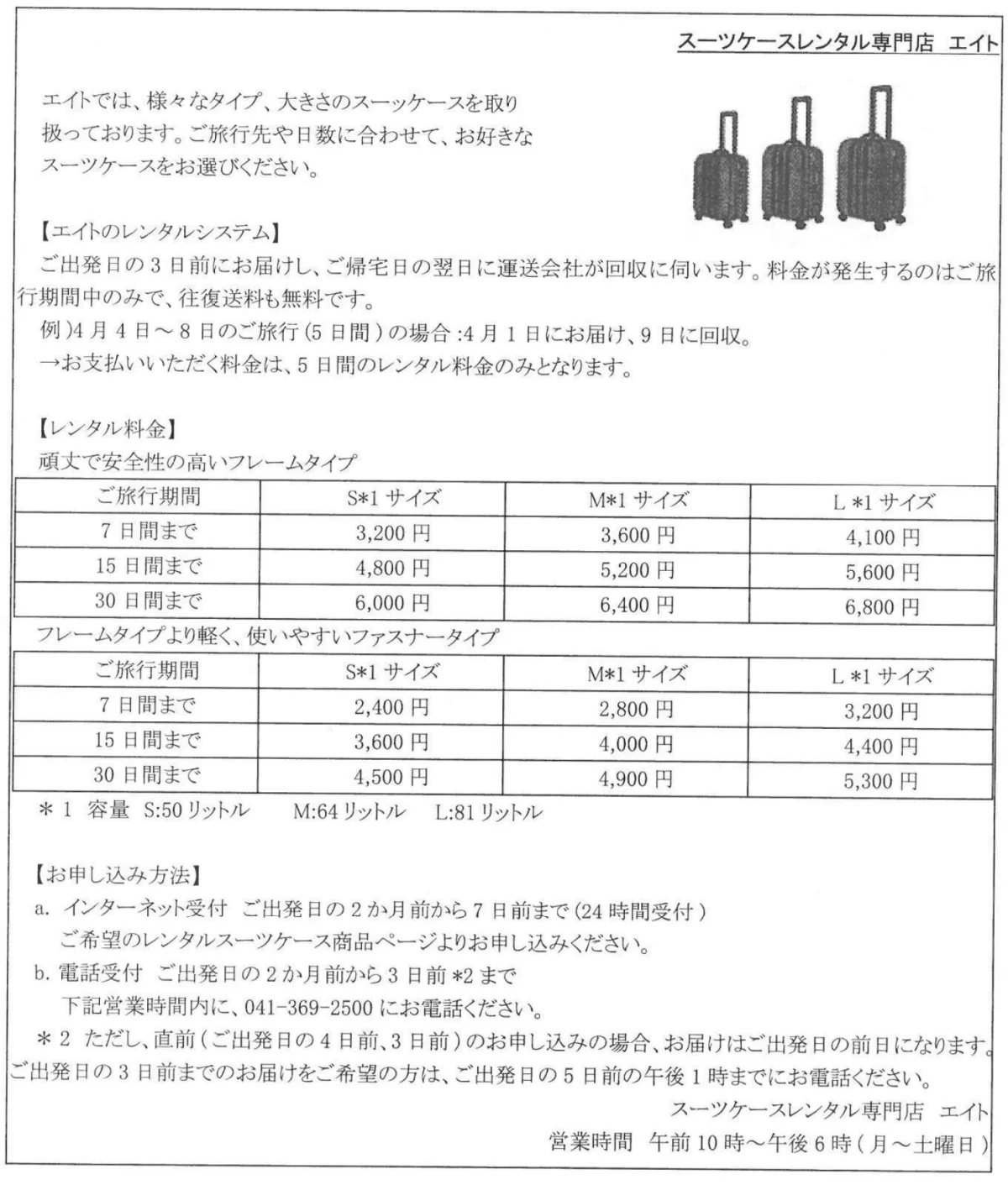
右のページは、あるレンタル専門店のホームページである。下の問いに対する答えとして最もよいものを、1・2・3・4から一つ選びなさい。
-
74.ワンさんは旅行用にできるだけ軽いスーツケースを借りたいと考えている。容量は60リットルあればいい。ワンさんの旅行期間は10日間だが、ワンさんの希望に最も合うスーツケースを借りる場合、料金はいくらになるか。
From the Dec 2018 paper
Show answer
Answer: 3. 4,000円
Reading a price tablematch type by weight, size by capacity, row by travel days
The passage says "フレームタイプより軽く、使いやすいファスナータイプ", so the lightest choice is the fastener type. Capacity needs 60 liters, and "*1 容量 S:50リットル M:64リットル L:81リットル" shows M at 64 liters is the smallest size that meets it. For a 10 day trip the "15日間まで" row applies, and the fastener M cell is 4,000 yen, which option 3 restates.
Remember
When a question gives three conditions, check all three against the table. Do not pick a cheaper cell that is too small or for too few days.
Why not the others
Words
- できるだけas much as possible
- 容量capacity
- 旅行期間travel period
- 料金fee, charge
- 頑丈sturdy, solid
-
75.タンヤさんは出張用にスーツケースを借りることにした。今日は出発日の6日前である。出発日の3日前にスーツケースを届けてもらうためには、どうしなければならないか。
From the Dec 2018 paper
Show answer
Answer: 3. 電話で、明日(出発日の5日前)の午後1時までに申し込む。
Reading application deadlinesinternet vs phone periods plus footnote exception
The general phone rule is "ご出発日の2か月前から3日前まで", but footnote *2 adds "ご出発日の3日前までのお届けをご希望の方は、ご出発日の5日前の午後1時までにお電話ください". Since today is 6 days before departure, calling by 1pm tomorrow, which is 5 days before, meets that earlier deadline for delivery 3 days before, which option 3 restates.
Remember
Footnotes with ただし often override the main rule for last minute cases. For deadline questions, first check the method, then check the footnote date and time.
Why not the others
Words
- 出張business trip
- 出発日departure date
- 申込application
- 直前just before
- 届けdelivery
Listening 45 min · 27 questions
問題1課題理解Task comprehension
問題1では、まず質問を聞いてください。それから話を聞いて、問題用紙の1から4の中から、最もよいものを一つ選んでください。
-
1番

The choices are the numbered pictures above.
Show answer
Answer: 2.
-
2番
Show answer
Answer: 4. 値段をかくにんする
-
3番
Show answer
Answer: 4. インターネットで申し込む
-
4番
Show answer
Answer: 2. 指定された本をむ
-
5番
Show answer
Answer: 4. 作品の写真をとる
問題2ポイント理解Key-point comprehension
問題2では、まず質問を聞いてください。そのあと、問題用紙のせんたくしを読んでください。読む時間があります。それから話を聞いて、問題用紙の1から4の中から、最もよいものを一つ選んでください。
-
1番
Show answer
Answer: 2. 一人でのんびり過ごす
-
2番
Show answer
Answer: 3. 体力が続かなかったから
-
3番
Show answer
Answer: 2. しゅこうする学生の数が増えたから
-
4番
Show answer
Answer: 4. 自分をよく見せようとしない
-
5番
Show answer
Answer: 3. 土曜日の 5000 円のツアー
問題3概要理解Gist comprehension
問題3では、問題用紙に何も印刷されていません。この問題は、全体としてどんな内容かを聞く問題です。話の前に質問はありません。まず話を聞いてください。それから、質問とせんたくしを聞いて、1から4の中から、最もよいものを一つ選んでください。
-
1番
The 4 choices are spoken, not printed. Listen, then pick a number.
Show answer
Answer: 1.
-
2番
The 4 choices are spoken, not printed. Listen, then pick a number.
Show answer
Answer: 1.
-
3番
The 4 choices are spoken, not printed. Listen, then pick a number.
Show answer
Answer: 3.
-
4番
The 4 choices are spoken, not printed. Listen, then pick a number.
Show answer
Answer: 4.
-
5番
The 4 choices are spoken, not printed. Listen, then pick a number.
Show answer
Answer: 3.
問題4即時応答Quick response
問題4では、問題用紙に何も印刷されていません。まず文を聞いてください。それから、それに対する返事を聞いて、1から3の中から、最もよいものを一つ選んでください。
-
1番
The 3 choices are spoken, not printed. Listen, then pick a number.
Show answer
Answer: 2.
-
2番
The 3 choices are spoken, not printed. Listen, then pick a number.
Show answer
Answer: 1.
-
3番
The 3 choices are spoken, not printed. Listen, then pick a number.
Show answer
Answer: 3.
-
4番
The 3 choices are spoken, not printed. Listen, then pick a number.
Show answer
Answer: 2.
-
5番
The 3 choices are spoken, not printed. Listen, then pick a number.
Show answer
Answer: 1.
-
6番
The 3 choices are spoken, not printed. Listen, then pick a number.
Show answer
Answer: 1.
-
7番
The 3 choices are spoken, not printed. Listen, then pick a number.
Show answer
Answer: 1.
-
8番
The 3 choices are spoken, not printed. Listen, then pick a number.
Show answer
Answer: 3.
-
9番
The 3 choices are spoken, not printed. Listen, then pick a number.
Show answer
Answer: 2.
-
10番
The 3 choices are spoken, not printed. Listen, then pick a number.
Show answer
Answer: 3.
-
11番
The 3 choices are spoken, not printed. Listen, then pick a number.
Show answer
Answer: 3.
問題5統合理解Integrated comprehension
問題5では、長めの話を聞きます。この問題には練習はありません。メモをとってもかまいません。
-
1番Not scored
-
2番Not scored
-
3番
Show answer
Answer: 2. 教師をしている林さん
Explanations are AI-generated and are sometimes not accurate. Spotted a mistake in a question or answer? Write to us at hello@practicejlpt.com and we’ll fix it.