
N5 Mock test 1
2018 paper
Set aside 1 hour 29 minutes
Three timed sections in one sitting. Once a section ends you can't go back to it. Have headphones ready for the listening.
- Vocabulary20 min · 21 questions
- Grammar · Reading40 min · 23 questions
- Listening29 min · 24 questions
Vocabulary 20 min · 21 questions
問題1漢字読み
_____の ことばは ひらがなで どう かきますか。1・2・3・4から いちばん いい ものを ひとつ えらんで ください。
-
1.あしたは 雨ですか。
Show answer
Answer: 2. あめ
雨'rain', kun'yomi あめ, on'yomi ウ in compounds
あしたは 雨ですか。
Is it going to rain tomorrow?
The underlined kanji 雨 means rain and is read あめ, which is its kun'yomi. The clue あしたは ...ですか asks about tomorrow's weather, so a weather word is needed. あめ gives the correct reading for rain.
Remember
Remember 雨 alone as あめ, and on'yomi ウ in compounds like 雨天 meaning rainy weather.
Why not the others
Words
- あしたtomorrow
- 雨rain
-
2.きょうしつで 書いて ください。
Show answer
Answer: 3. かいて
書いてte-form of 書く 'to write', kun'yomi か
きょうしつで 書いて ください。
Please write it in the classroom.
書く means to write and uses kun'yomi か. Its te-form is 書いて. The clue きょうしつで ...ください is a polite request to do something in the classroom, so to write fits the context.
Remember
Remember verbs ending in く change く to いて in the te-form: 書く to 書いて, and 聞く to 聞いて.
Why not the others
Words
- 教室classroom
- 書くto write
- くださいplease do
-
3.しゃしんは はこの 中に あります。
Show answer
Answer: 2. なか
中'inside', kun'yomi なか, on'yomi チュウ and ジュウ
しゃしんは はこの 中に あります。
The photos are inside the box.
The underlined kanji 中 means inside and is read なか, which is its kun'yomi. The clue はこの ...にあります describes where the photos are, and はこ means box. なか gives inside the box.
Remember
Remember 中 as なか for physical inside, and on'yomi チュウ or ジュウ in compounds like 一日中 meaning all day.
Why not the others
Words
- 写真photo
- 箱box
- 中inside
-
4.この いすは 小さいです。
Show answer
Answer: 3. ちいさい
小さいi-adjective 'small', spelled ちい not し
この いすは 小さいです。
This chair is small.
小さい means small and is read ちいさい. It starts with ち, not し, and has the long ii sound spelled with double い. The clue この いすは ...です describes the chair, so small fits.
Remember
Remember the pair 小さい meaning small and 大きい meaning big. Both spell the long ii with double い.
Why not the others
Words
- いすchair
- 小さいsmall
-
5.あしたは 火よう日です。
Show answer
Answer: 1. かようび
火曜日'Tuesday', 火 is on'yomi か in days of week
あしたは 火よう日です。
Tomorrow is Tuesday.
火よう日 means Tuesday. In days of the week, 火 uses on'yomi か. The clue あしたは ...です asks what day tomorrow is, so かようび gives the correct day name.
Remember
Remember the first kanji of the weekdays: 日, 月, 火, 水, 木, 金, 土, all plus ようび.
Why not the others
Words
- あしたtomorrow
- 火よう日(かようび)Tuesday
-
6.きれいな 空ですね。
Show answer
Answer: 3. そら
空 (そら)'sky', kun'yomi そら
きれいな空ですね。
The sky is beautiful, isn't it?
空 means sky and is read そら, which is its kun'yomi. The clue きれいな, meaning beautiful or clean, describes the sky in this comment. The other readings belong to different everyday nouns with different kanji.
Remember
Remember 空 as そら for sky, and クウ in 空港, airport. N5 often tests nature nouns together, so check the kanji shape, not only the topic.
Why not the others
Words
- きれいなbeautiful, clean
- 空sky
-
7.せいとは 百人 います。
Show answer
Answer: 4. ひゃくにん
百人 (ひゃくにん)'100 people', 百 stays ひゃく and people counter is にん
せいとは百人います。
There are one hundred students.
百 means 100 and is read ひゃく. 人 as a counter for people is read にん, giving ひゃくにん. The sentence counts students with います, so the people counter にん is required.
Remember
Remember the people counter is ~にん, except 一人 and 二人. Remember 百 is ひゃく, but 三百, 六百 and 八百 change sound.
Why not the others
Words
- 生徒student
- 百人100 people
- いますto exist, there is
問題2表記
_____の ことばは どう かきますか。1・2・3・4から いちばん いい ものを ひとつ えらんで ください。
-
8.この わいしゃつを ください。
Show answer
Answer: 2. ワイシャツ
ワイシャツ (わいしゃつ)'dress shirt', katakana loanword with small ャ and final ツ
この ワイシャツを ください。
I'll take this dress shirt.
わいしゃつ is a loanword from English 'white shirt', so it is written in katakana. The correct form is ワイシャツ, with ワイ for 'wai', シャ with small ャ for 'sha', and ツ for 'tsu'. The clue をください asks for an item, and dress shirt fits that shopping request.
Remember
For katakana look-alikes, count the top ticks: ツ has two, ソ has one. Also watch small ャ in シャ, チャ, ジャ, which marks a combined sound.
Why not the others
Words
- ワイシャツ(わいしゃつ)dress shirt
- くださいplease give me
-
9.わたしの くにには かわが おおいですね
Show answer
Answer: 1. 川
川 (かわ)'river', three flowing lines, not tree, mountain or flower
わたしの くにには 川が おおいですね
There are many rivers in my country, aren't there?
The underlined かわ reads as 川, which means 'river'. The deciding clue is おおいですね, 'there are many', which counts rivers in a country. Only 川 matches both the reading かわ and that meaning.
Remember
Learn N5 nature kanji as reading sets: 川 river, 山 mountain, 木 tree, 花 flower. The exam often swaps them.
Why not the others
Words
- 国country
- 川river
- 多いmany, numerous
-
10.ヤンさんの がっこうは どこですか。
Show answer
Answer: 2. 学校
学校 (がっこう)'school', 学 'learn' + 校 'school building'
ヤンさんの 学校は どこですか。
Where is Yan's school?
がっこう means 'school' and is written with two kanji: 学 'learn' plus 校 'school'. The clue どこですか, 'where is it', asks for a place, and school fits. Only option 2 combines both correct kanji in the correct order.
Remember
学 means 'learn' as in 学校, 学生, 大学. 校 means 'school' as in 学校, 高校. 宇 and 枚 never mean school.
Why not the others
Words
- 学校school
- どこwhere
-
11.この ざっしを みて ください。
Show answer
Answer: 1. 見て
見て (みて)te-form of 見る 'to see, look at', kanji 見 'see'
この ざっしを 見て ください。
Please look at this magazine.
みて is the te-form of 見る, 'to see, look at'. The kanji 見 means 'see'. The clue is ざっしを plus ください: を marks what you look at, and てください makes a polite request, so 'please look' fits.
Remember
Separate 見る to see (verb) from 目 eye (noun), and 貝 shell from 買う to buy. Godan verbs ending in う, つ, る change to って in the te-form, as in 買って, while ichidan verbs like 見る just add て as in 見て.
Why not the others
Words
- 雑誌magazine
- 見るto see, to look at
- くださいplease do (after te-form)
-
12.この カメラは たかいですね。
Show answer
Answer: 3. 高い
高い (たかい)i-adjective 'expensive, high', opposite of 安い
この カメラは 高いですね。
This camera is expensive, isn't it?
たかい is 高い, an i-adjective meaning 'expensive' or 'high'. The kanji 高 means 'high, tall'. The clue is カメラは plus ね, commenting on price, so 'expensive' fits.
Remember
Learn N5 adjectives in opposite pairs: 高い expensive, high vs 安い cheap, and 新しい new vs 古い old.
Why not the others
Words
- カメラ(かめら)camera
- 高いexpensive; high
- 安いcheap
問題3文脈規定
( )に なにを いれますか。1・2・3・4から いちばん いい ものを ひとつ えらんで ください。
-
13.わたしの へやは この アパートの 2( )です。
Show answer
Answer: 4. かい
2かいsecond floor, かい is the counter for floors in a building
わたしの へやは この アパートの 2かいです。
My room is on the second floor of this apartment building.
The clue is この アパートの 2...です, which asks for the location of the room inside the building. かい is the counter for floors, so 2かい means the second floor. The other counters count different kinds of objects, not floors.
Remember
Learn counters in sets: かい for floors, ほん for long thin things, だい for machines, さつ for books. The noun before the number tells you which counter fits.
Why not the others
Words
- へやroom
- アパートapartment building
- かいcounter for floors
-
14.その ナイフで りんごを ( )ください。
Show answer
Answer: 3. きって
きってte-form of きる to cut, used in てください polite requests
その ナイフで りんごを きってください。
Please cut the apple with that knife.
The clues are ナイフで, which means with a knife, and りんごを, which marks the apple as the object. The action that connects a knife and an apple is cutting. きって is the te-form of きる to cut, and きってください makes a polite request.
Remember
てください follows the te-form to ask someone to do something. Keep verb pairs apart: きる to cut, しめる to close, つける to turn on.
Why not the others
Words
- ナイフknife
- りんごapple
- きるto cut
-
15.( )を わすれましたから、じかんが わかりません。
Show answer
Answer: 2. とけい
とけいwatch or clock, the object linked to knowing じかん
とけいを わすれましたから、じかんが わかりません。
I forgot my watch, so I do not know the time.
The second clause じかんが わかりません says the speaker does not know the time. The first clause with から gives the reason, so the forgotten thing must explain why the time is unknown. とけい, a watch or clock, is the only option that tells the time.
Remember
In a から reason sentence, read the result clause first. It tells you what kind of cause must come before から.
Why not the others
Words
- とけいwatch, clock
- わすれるto forget
- じかんtime
- わかるto know, to understand
-
16.わたしの うちは えきに ちかいですから、( )です。
Show answer
Answer: 4. べんり
べんりconvenient, describes the result of being えきにちかい
わたしの うちは えきに ちかいですから、べんりです。
My house is close to the station, so it is convenient.
The clue is えきに ちかいですから, which gives the reason that the house is close to the station. から connects that reason to a result. べんり, convenient, is the evaluation that follows from a good location.
Remember
から links a fact to an evaluation of that fact. After えきにちかい, expect a word like べんり that judges living there.
Why not the others
Words
- うちhouse, home
- えきstation
- ちかいclose, near
- べんりconvenient
-
17.なつやすみは まいにち ( )で およぎました。
Show answer
Answer: 1. プール
プールでおよぐto swim in a pool, で marks the place of an action
なつやすみは まいにち プールで およぎました。
During the summer vacation, I swam in the pool every day.
The clue is the verb およぎました, swam. The particle で marks the place where that action happens. プール, pool, is the only option that is a place for swimming.
Remember
で marks the place where an action happens, as in プールでおよぐ. Match the place noun to the verb: pool with swim, restaurant with eat.
Why not the others
Words
- なつやすみsummer vacation
- まいにちevery day
- プールpool
- およぐto swim
-
18.しらない ことばが ありましたから、せんせいに ( )しました。
Show answer
Answer: 1. しつもん
しつもんする'to ask a question', says せんせいにしつもんする
しらない ことばが ありましたから、せんせいに しつもんしました。
There was a word I did not know, so I asked the teacher a question.
The first half gives the reason with から: there was a word the speaker does not know. The second half says せんせいに ...しました, an action directed at the teacher with に. しつもんしました means asked a question, which is the action you direct at a teacher when you do not understand.
Remember
Remember the collocation せんせいにしつもんする, to ask the teacher a question. べんきょうする and れんしゅうする take を for the thing studied or practiced.
Why not the others
Words
- 知らないnot know
- 言葉word
- 先生teacher
- 質問question
問題4言い換え類義
_____の ぶんと だいたい おなじ いみの ぶんが あります。1・2・3・4から いちばん いい ものを ひとつ えらんで ください。
-
19.これは りょうしんの しゃしんです。
Show answer
Answer: 3. これは ちちと ははの しゃしんです。
りょうしん'parents', same as ちちと はは
これはりょうしんのしゃしんです。
This is a photo of my parents.
りょうしん means parents. In the answer, ちちと はは means my father and my mother, so it names the same two people. The clue is の しゃしん, which asks who is in the photo, so the pair of people must match.
Remember
Remember りょうしん = ちちと はは. Keep family pairs apart: sisters, brothers, and そふと そぼ for grandparents.
Why not the others
Words
- 両親parents
- 写真photo
- 父my father
- 母my mother
-
20.この ダンスは やさしいです。
Show answer
Answer: 1. この ダンスは かんたんです。
やさしい'easy' for a task, same as かんたん
このダンスはやさしいです。
This dance is easy.
やさしい has two meanings, kind for people and easy for tasks. Here it describes ダンス, a task to learn, so it means easy, not difficult. かんたんです also means easy or simple, so it is the same meaning here.
Remember
For tasks and lessons, やさしい = かんたん, and the opposite is むずかしい. For people, やさしい means kind.
Why not the others
Words
- 易しいeasy; kind
- 簡単easy, simple
- 大変hard, tough
-
21.ふくを せんたくしました。
Show answer
Answer: 4. ふくを あらいました。
ふくを せんたくする'to wash clothes', same as あらう
ふくをせんたくしました。
I washed the clothes.
せんたくしました comes from せんたくする, which means to do laundry. あらいました comes from あらう, which means to wash. With ふく as the object, both describe washing clothes.
Remember
Remember the laundry set: せんたくする for laundry, あらう for wash, きる for put on, ぬぐ for take off.
Why not the others
Words
- 服clothes
- 洗濯するto do laundry
- 洗うto wash
- 着るto wear, to put on
Grammar · Reading 40 min · 23 questions
問題1文法形式の判断
( )に 何を 入れますか。1・2・3・4から いちばん いい ものを 一つ えらんで ください。
-
1.私は あしたの ひこうき( )国へ 帰ります。
Show answer
Answer: 3. で
で'by, with, using' for means or method, after a noun
私は あしたの ひこうきで 国へ 帰ります。
I will go back to my country on tomorrow's flight.
ひこうき names the means of travel, not the destination. 帰ります already shows the destination with 国へ, so the means takes で. This is the same で as in バスで and 電車で.
Remember
Spot travel means with で: バスで, 電車で, ひこうきで. Use に or へ for the destination and を for the place you leave, as in 家を出ます.
See で Marks the location of an action, or the means or method used →See で Indicates the tool, method, or means used to do something →
Why not the others
Words
- ひこうきairplane, flight
- 国country, home country
- 帰りますto return, to go back
- あしたtomorrow
-
2.先週 デパートで かばん( )くつなどを 買いました。
Show answer
Answer: 1. や
かばんやくつなどや 'and' for an incomplete list, closed by など
先週 デパートで かばんや くつなどを 買いました。
Last week I bought things like a bag and shoes at the department store.
など after くつ shows the list is only examples, not everything. や connects nouns when the list is incomplete, while と would mean those are all the items. デパートで already marks the place of the action 買いました.
Remember
Use や ... や ... など for examples: パンや牛乳など. Use と ... と for a complete list with nothing else: パンと牛乳を買いました.
Why not the others
Words
- 先週last week
- デパートdepartment store
- かばんbag
- くつshoes
- 買いましたbought
-
3.私は 毎朝 7時ごろ 家( )出ます。
Show answer
Answer: 4. を
家を出ますを marks the starting point you leave, after 出ます
私は 毎朝 7時ごろ 家を 出ます。
I leave home at about 7 every morning.
出ます means to leave or go out, so 家 is the place you leave, not the destination. を marks that starting point, as in へやを出ます. The time clue 7時ごろ tells when, but the particle is decided by 出ます.
Remember
Verbs of leaving take を for the exit point: 家を出る, へやを出る, 学校を出る. Verbs of going take に or へ for the destination: 学校に行く.
Why not the others
Words
- 毎朝every morning
- ごろabout, approximately
- 家house, home
- 出ますto leave, to go out
-
4.きのう スーパーで 田中さん( )会いました。
Show answer
Answer: 3. に
~に会いますに marks the person you meet, after the other party
きのう スーパーで 田中さんに 会いました。
I met Mr. Tanaka at the supermarket yesterday.
会いました needs に to show the other person, as in 友だちに会います. スーパーで already marks the place of the action, so the person cannot also take で. The time clue きのう confirms the past meeting.
Remember
Learn に会う as a set: 先生に会う, 友だちに会う. Other verbs that take に for the partner are 聞く and 頼む, as in 先生に聞く.
See に Particle marking the recipient of an action (to/for) →See に Particle showing direction or target, meaning to or toward →
Why not the others
Words
- きのうyesterday
- スーパーsupermarket
- 田中さんMr. Tanaka, Ms. Tanaka
- 会いましたmet
-
5.私の うちの ほんだなは、きょねん 父( )作りました。
Show answer
Answer: 2. が
は for topic and が for subject父が marks the doer when ほんだなは is the topic
私の うちの ほんだなは、きょねん 父が 作りました。
My father made the bookshelf in my house last year.
ほんだなは with は sets the bookshelf as the topic. 作りました still needs the doer, and 父が with が supplies it. The time word きょねん shows when the making happened, but the choice is decided by topic versus subject.
Remember
When the topic is the thing, as in ほんだなは, use が for the maker or doer: 父が作りました. Remember は introduces what you talk about, が points to who did it.
Why not the others
Words
- うちhouse, home
- ほんだなbookshelf
- きょねんlast year
- 父father
- 作りましたmade
-
6.今日 やおやで りんごを 買いました。五つ( )1,000円でした。
Show answer
Answer: 1. で
で'for (price)', links quantity to total price, as in 五つで1,000円
今日やおやでりんごを買いました。五つで1,000円でした。
Today I bought apples at the greengrocer. Five of them were 1,000 yen.
The second sentence pairs a quantity, 五つ, with a price, 1,000円でした. で after a quantity shows the total price for that amount, meaning for. The clue is the pattern number plus price plus でした.
Remember
Use quantity plus で plus price for rates: 三つで500円, 一人で2,000円. Use に for the time or destination, not for the price per quantity.
Why not the others
Words
- 八百屋greengrocer
- りんごapple
- 買うto buy
- 五つfive things
-
7.きのう( )少し 寒かったですが、今日( )寒くないです。
Show answer
Answer: 2. は/は
はtopic marker for contrast, きのうは〜、今日は〜 compares two times
きのうは少し寒かったですが、今日は寒くないです。
Yesterday it was a little cold, but today it is not cold.
The sentence contrasts きのう with 今日, and 寒かったです with 寒くないです, joined by が meaning but. は marks each time as a topic so the two opposite descriptions can be compared. The pair of different times plus opposite predicates is the clue.
Remember
Use はは to contrast opposites: きのうは〜、今日は〜. Use もも when both parts point the same way, as in both cold or both not cold.
Why not the others
Words
- 昨日yesterday
- 少しa little
- 寒いcold
- 今日today
-
8.南町は、海が きれい( )、静かです。
Show answer
Answer: 3. で
きれいでte-form of きれいです, joins two descriptions with 'and'
南町は、海がきれいで、静かです。
As for Minamimachi, the sea is beautiful and the town is quiet.
The sentence gives two positive descriptions, 海がきれい and 静かです. A na-adjective plus です connects to another predicate with で, giving きれいで. The clue is that two separate descriptions of 南町 need to be joined into one sentence.
Remember
Join descriptions with the te-form: na-adjective plus で as in きれいで, i-adjective plus くて as in 寒くて. Do not use や or と, which join nouns, not predicates.
Why not the others
Words
- 南町Minami Town
- 海sea
- きれいbeautiful, clean
- 静かquiet
-
9.前川「林さん、( )に ある カメラは 林さんのですか。」
Show answer
Answer: 1. そこ
そこにあるカメラ'the camera that is there', そこ is near the listener
林さん、そこにあるカメラは林さんのですか。
Hayashi-san, is the camera over there yours?
Maekawa is speaking to Hayashi-san and asks about a camera placed in Hayashi-san's area. そこ points to a place near the listener, and そこにあるカメラ means the camera that is in that place. The clue is にある, which needs a place word before it.
Remember
Use place plus にある plus noun to identify a thing by location: そこにある本, ここにあるかばん. Use その or どの directly before a noun: その本, どの本.
Why not the others
Words
- カメラcamera
- 林Hayashi (surname)
- あるto exist (for things)
問題2文の組み立て
★ に 入る ものは どれですか。1・2・3・4から いちばん いい ものを 一つ えらんで ください。
-
10.A「すみません、つぎの _____ _____ ★ _____ まがって ください。」 B「はい、わかりました。」
Show answer
Answer: 2. 右
を右に曲がる'turn right at', place with を and direction with に
すみません、つぎのしんごうを右にまがってください。
Excuse me, please turn right at the next traffic light.
The words after the blanks, まがってください, fix the verb as 曲がる. This verb uses を for the place where you turn and に for the direction. つぎの needs a noun, so しんごう comes first to make つぎのしんごう, then the chunk しんごうを右に joins to まがってください.
Remember
Spot the set つぎの + place + を + 右に / 左に + 曲がる. The order を then direction + に is fixed.
Why not the others
Words
- つぎnext
- 信号traffic light
- 右right
- 曲がるto turn
-
11.私は 日曜日に 兄 _____ _____ ★ _____ で出かけました。
Show answer
Answer: 1. と
兄の子どもと いっしょに'together with one's brother's child', と for companion
私は日曜日に兄の子どもといっしょに出かけました。
I went out together with my older brother's child on Sunday.
The verb 出かけました is modified by いっしょに, which must come just before it. いっしょに pairs with と to mark the companion. Before that, の joins 兄 and 子ども into one noun phrase 兄の子ども. So the order is 兄の子どもと いっしょに.
Why not the others
Words
- 兄older brother
- 子どもchild
- いっしょにtogether
- 出かけるto go out
-
12.きのう 買った おかしは _____ _____ ★ _____ でした。
Show answer
Answer: 2. が
まるくて色がきれいte-form links clauses, が marks subject of description
きのう買ったおかしはまるくて色がきれいでした。
The sweets I bought yesterday were round and their color was pretty.
The end でした needs the na-adjective きれい just before it. Before that, が marks the subject 色が. The te-form まるくて comes first to link the round shape to the next description. So the order is まるくて 色が きれいでした.
Remember
For describing one thing in two ways, use te-form + 色が + adjective. The pattern は...が often describes a part or feature.
Why not the others
Words
- おかしsweets, snacks
- まるいround
- 色color
- きれいpretty, clean
-
13.駅の _____ _____ ★ _____ でざっしを 買いました。
Show answer
Answer: 4. ある
近くにある本屋でrelative clause with ある, action place with で
駅の近くにある本屋でざっしを買いました。
I bought a magazine at the bookstore near the station.
The words after the blanks, でざっしを買いました, show that 本屋で is the place of buying. 本屋 needs a modifier before it, which is 駅の近くにある. Inside that modifier, にある follows 近く to express existence. So the order is 近くに ある 本屋で.
Remember
Spot the chain place + の近くにある + shop + で + action verb. にある modifies the noun, で marks where you do something.
Why not the others
Words
- 駅station
- 近くnearby, vicinity
- 本屋bookstore
- 雑誌magazine
問題3文章の文法
( 22 )から( 26 )に 何を 入れますか。ぶんしょうの いみを かんがえて、1・2・3・4から いちばん いい ものを 一つ えらんで ください。
ニンさんと メイさんは「私の 好きな 飲み物」の さくぶんを 書いて、クラスの みんなの 前で 読みます。
(1) ニンさんの さくぶん
私の 好きな 飲み物は くだものの ジュースです。大好きな ジュースは すいかジュースです。私の 国では いろいろな 店に あります。( 22 )、日本では 売って いる 店を 知りません。日本で 好きな ジュースは りんごジュースです。
みなさんは 何の ジュースが 好きですか。好きな ジュースを( 23 )。
(2) メイさんの さくぶん
私は きっさてんで 飲む コーヒーが 大好きです。先週も きっさてんで おいしい コーヒーを 飲みました。先週の 土曜日は いい 天気でした。昼に 買い物を してから、きっさてんに( 24 )。名前は「はな」です。「はな」( 25 )コーヒーは 安かったです。私は 2はい 飲みました。来週も「はな」に コーヒーを( 26 )。
-
14.( 22 )に入るのに最もよいものはどれか。
Show answer
Answer: 2. でも
でも'but, however' at the start of a sentence, shows contrast with the last sentence
でも、日本では売っている店を知りません。
But I do not know any shops that sell it in Japan.
The clue is the contrast. The previous sentence says 私の国ではいろいろな店にあります, watermelon juice is in many shops in my country. The next sentence says the opposite for Japan, 日本では売っている店を知りません. でも at the start of a sentence marks that opposite, but type contrast.
Remember
At the start of a sentence, でも = but, だから = so, and もっと = more. On N5 cloze, look back one sentence: opposite facts need でも, cause and result need だから.
Why not the others
Words
- くだものfruit
- いろいろなvarious, many kinds of
- 売るto sell
- 知るto know
-
15.( 23 )に入るのに最もよいものはどれか。
Show answer
Answer: 3. 教えて ください
〜てください'please do ~', request with te-form + ください
好きなジュースを教えてください。
Please tell me your favorite juice.
The clue is みなさんは何のジュースが好きですか. Nin asks the class a question, then asks them to tell her. A request to the listener uses the te-form + ください. 教えてください means please tell me.
Remember
ください after the te-form asks the listener to act: 教えてください, 見てください. たいです states the speaker's own wish, and ますよ states what the speaker will do.
Why not the others
Words
- 教えるto tell, to teach
-
16.( 24 )に入るのに最もよいものはどれか。
Show answer
Answer: 3. 入りました
た-formpast event, 入りました 'entered' for last Saturday's action
昼に買い物をしてから、きっさてんに入りました。
After shopping at noon, I went into a coffee shop.
The clue is the time setting. 先週の土曜日はいい天気でした and 先週もきっさてんで飲みました show this is a past story. After 昼に買い物をしてから, the next action also happened in the past, so the past form 入りました is needed.
Remember
してから joins two actions in order: Aをしてから B. Keep the tense the same as the story time. からです is only for giving a reason, not for continuing a sequence.
Why not the others
Words
- 昼noon, daytime
- 買い物(かいもの)shopping
- きっさてんcoffee shop
- 入るto enter
-
17.( 25 )に入るのに最もよいものはどれか。
Show answer
Answer: 1. の
〜の〜'of ~, at ~', の joins two nouns, はなのコーヒー
「はな」のコーヒーは安かったです。
The coffee at Hana was cheap.
The clue is the nouns on both sides. はな is the shop name and コーヒー is a thing. の connects noun to noun to mean the coffee of that shop. The topic is that coffee, so は follows: はなのコーヒーは安かったです.
Remember
Use の to link two nouns: AのB. Use と for and or with, より for AよりB comparisons, and から for from a place or time.
Why not the others
Words
- 名前name
- 安いcheap, inexpensive
-
18.( 26 )に入るのに最もよいものはどれか。
Show answer
Answer: 4. 飲みに 行きます
ます-stem + に + 行きます'go in order to do ~', purpose of movement
来週も「はな」にコーヒーを飲みに行きます。
Next week too, I will go to Hana to drink coffee.
The clues are 来週も and に. 来週も points to a future movement, and はなに marks the destination. Purpose of going uses the masu-stem + に + movement verb: 飲みに行きます. 行きます is used because she goes away from where she is now.
Remember
For purpose of movement, use masu-stem + に + 行きます, 来ます or 帰ります: 買い物に行きます, 見に来ます. て-form + 行きます or 来ます only means do and then go or come.
Why not the others
Words
- 来週next week
- 飲むto drink
- 行くto go
- 来るto come
問題4内容理解(短文)
つぎの ぶんしょうを 読んで、しつもんに こたえて ください。こたえは、1・2・3・4から いちばん いい ものを 一つ えらんで ください。
わたしは 毎朝 ご飯と なっとうか、パンと たまごを 食べて、学校へ 行きます。でも、けさは なにも 食べませんでした。バナナを 学校へ 持って いきました。起きた 時間が おそかったからです。
-
19.けさ「わたし」は 学校へ 行く 前に、何を 食べましたか。
Show answer
Answer: 3. なにむ 食べませんでした。
けさ vs 毎朝'this morning' vs 'every morning', the time word decides which sentence answers
The question asks what she ate けさ, this morning, before going to school. The passage says "でも、けさは なにも 食べませんでした。" This means she ate nothing this morning, which option 3 restates. The first sentence about rice and bread describes 毎朝, every morning, not this morning.
Remember
When the question has a time word like けさ, find the same time word in the passage. After でも the writer often gives the special case for today, and that line usually holds the answer.
Why not the others
Words
- 毎朝every morning
- ご飯(ごはん)rice, meal
- けさthis morning
- 持って行く(もっていく)to take something somewhere
- 起きるto wake up
(大学で)
学生が この 紙を 見ました。
「日本語 1」と 「日本語 2」の クラスの みなさんへ
今日 出川先生は お昼まで お休みです。午前の「日本語 1」の クラスは ありません。午後の「日本語 2」の クラスは あります。
「日本語 1」の しゅくだいは 来週 出して ください。
2018年1月1日 高見大学
-
20.大学は「日本語 1」の クラスの 学生に 何が 言いたいですか。
Show answer
Answer: 4. 今日 クラスは ありません。しゅくだいは 来週 出して ください。
Reading a school noticematch the class name with 午前 'morning' and 午後 'afternoon'.
The notice says "午前の「日本語 1」の クラスは ありません" so the morning Japanese 1 class is cancelled today. It also says "「日本語 1」の しゅくだいは 来週 出して ください" so the homework is due next week. Option 4 restates both points, so it is the message to Japanese 1 students.
Remember
In notice questions, check the name before each fact. Here "日本語 1" and "日本語 2" have opposite schedules, so do not mix up 午前 and 午後.
Why not the others
Words
- しゅくだいhomework
- お休み(おやすみ)day off, absence
- 午前morning, A.M.
- 午後afternoon, P.M.
- 来週next week
問題5内容理解(中文)
つぎの ぶんしょうを 読んで、しつもんに こたえて ください。こたえは、1・2・3・4から いちばん いい ものを 一つ えらんで ください。
これは チンさんが 書いた さくぶんです。
まちがえました
チン シュン
私は きのうの 日曜日、友だちと サッカーを しました。朝から ゆうがたまで しましたから、とても つかれました。ゆうべは ばんご飯を 食べた あとで、すぐに ねました。ですから、今日の かんじテストの べんきょうが できませんでした。けさは 8時に 起きました。シャワーを あびて、朝ご飯を 食べました。それから、すぐ かんじの テキストの 41ページから 60ページまで べんきょうしました。それから 学校へ 行きました。
しかし、きょうしつで かんじを べんきょうしている 人は いませんでした。まちがえました。テストは 今日ではなくて、あしたでした。
-
21.どうして けさは 8時に 起きましたか。
Show answer
Answer: 3. かんじテストの べんきょうが したかったから
どうして'why', find the reason in できませんでした and the next morning action
The passage says "今日の かんじテストの べんきょうが できませんでした" and then "けさは 8時に 起きました". Right after that it says "41ページから 60ページまで べんきょうしました". Option 3 restates this sequence as wanting to study for the kanji test.
Remember
For why questions, check what the person could not do the night before and what they do right after with それから. The correct choice often paraphrases with したかった instead of repeating the passage words.
Why not the others
Words
- 起きるto get up, to wake up
- べんきょうstudy
- ゆうべlast night
- つかれるto get tired
-
22.チンさんは 何を まちがえましたか。
Show answer
Answer: 2. かんじの テストが ある 日
まちがえました'made a mistake', find 今日ではなくて、あしたでした at the end
The title is "まちがえました" and the last line settles it: "テストは 今日ではなくて、あしたでした". He thought the test was today and studied hard in the morning, but it was tomorrow. Option 2 restates this as mistaking the day of the test.
Remember
In mistake stories, the answer is often in the last sentence with ではなくて or でした. Do not choose a choice that repeats passage words but changes what was mistaken.
Why not the others
Words
- まちがえるto make a mistake
- きょうしつclassroom
- テストtest
問題6情報検索
右の ページを 見て、下の しつもんに こたえて ください。こたえは、1・2・3・4から いちばん いい ものを 一つ えらんで ください。
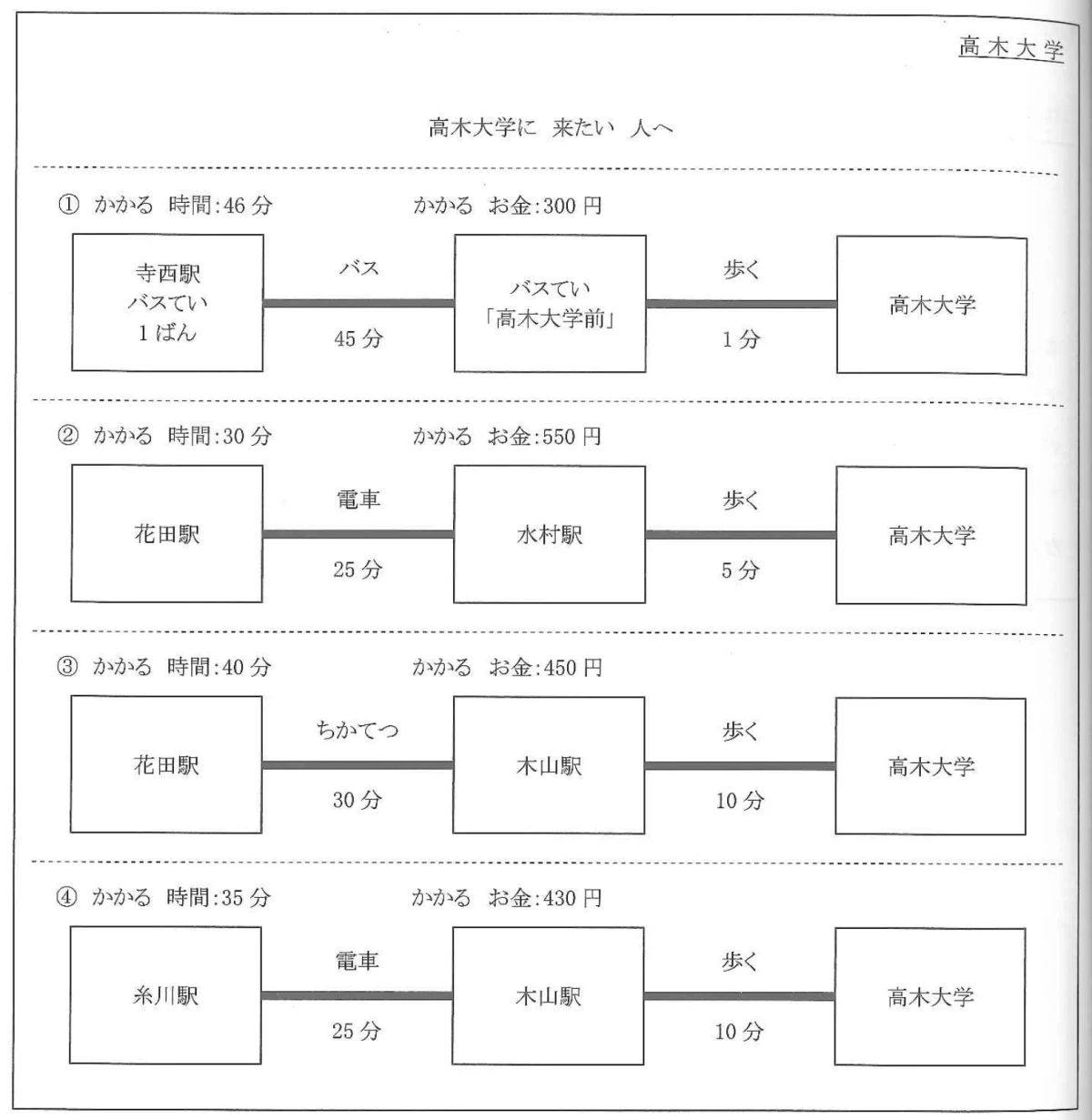
-
23.パブロさんは 高木大学に 行きたいです。花田駅か 糸川駅から 乗ります。駅から 大学まで かかる お金は 500円までで、時間は みじかい ほうが いいです。パブロさんは どの 行き方で 行きますか。
Show answer
Answer: 4. ④
500円までで 'up to 500 yen', みじかいほうがいい 'shorter is better': filter routes by conditions
Pablo rides from "花田駅か 糸川駅から", so route 1 from "寺西駅バスてい 1ばん" is out. Route 2 costs "かかる お金:550円", which is over "500円まで". Both route 3 "かかる 時間:40分 かかる お金:450円" and route 4 "かかる 時間:35分 かかる お金:430円" are within budget, but route 4 is shorter, so it matches "時間は みじかい ほうが いいです".
Remember
For table questions, check each condition separately. First remove choices that break the starting point or the limit, then compare time or cost among what is left.
Why not the others
Words
- かかるto take (time, money)
- 乗るto ride, to get on
- 短いshort (time, length)
- 行き方(いきかた)way of going, route
- バスていbus stop
Listening 29 min · 24 questions
問題1課題理解Task comprehension
もんだい1では、まず しつもんを 聞いて ください。それから 話を 聞いて、もんだいようしの 1から4の 中から、いちばん いい ものを 一つ えらんで ください。
-
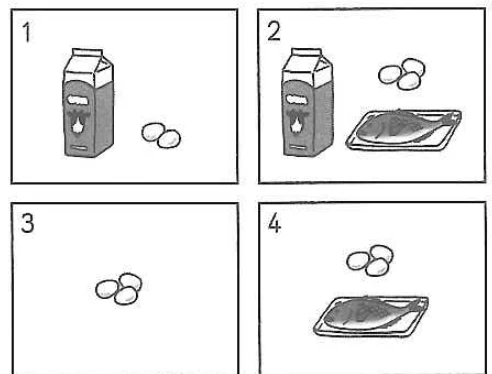
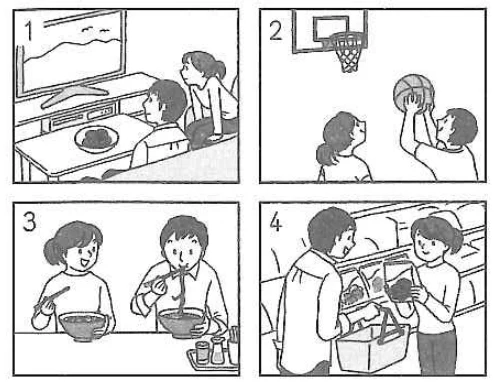
1番
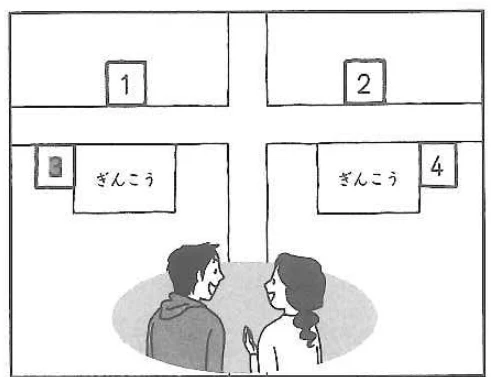
The choices are the numbered pictures above.
Show answer
Answer: 3.
-
2番
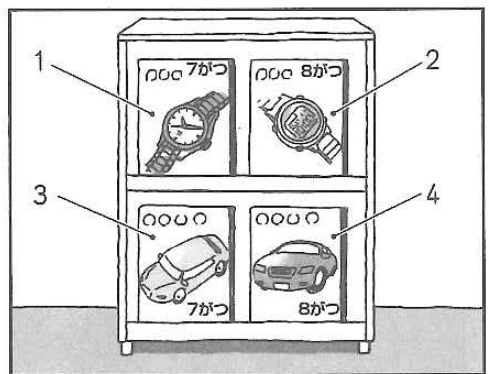
The choices are the numbered pictures above.
Show answer
Answer: 1.
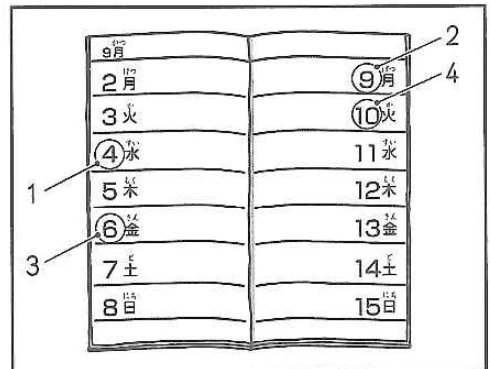
-
3番
The choices are the numbered pictures above.
Show answer
Answer: 4.
-
4番
The choices are the numbered pictures above.
Show answer
Answer: 2.
-
5番
Show answer
Answer: 1. げつようび
-
6番
Show answer
Answer: 4. 2かいの 4ばん
-
7番
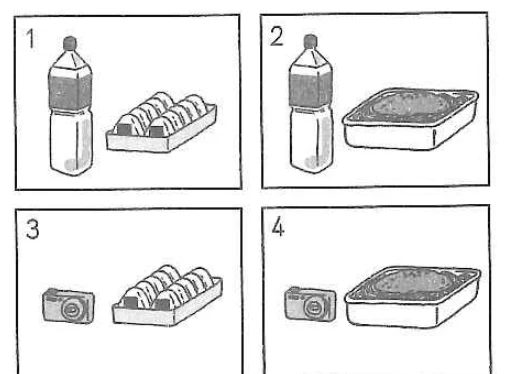
The choices are the numbered pictures above.
Show answer
Answer: 3.
問題2ポイント理解Key-point comprehension
もんだい2では、まず しつもんを 聞いて ください。そのあと、もんだいようしを 見て ください。読む 時間が あります。それから 話を 聞いて、もんだいようしの 1から4の 中から、いちばん いい ものを 一つ えらんで ください。
-
1番
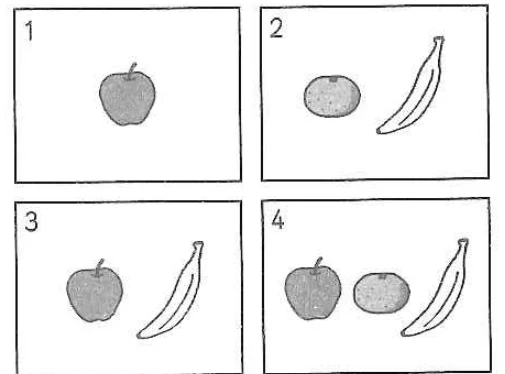
The choices are the numbered pictures above.
Show answer
Answer: 4.
-
2番
Show answer
Answer: 1. ひとり
-
3番
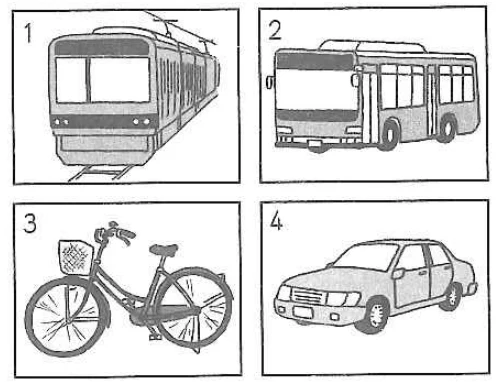
The choices are the numbered pictures above.
Show answer
Answer: 3.
-
4番
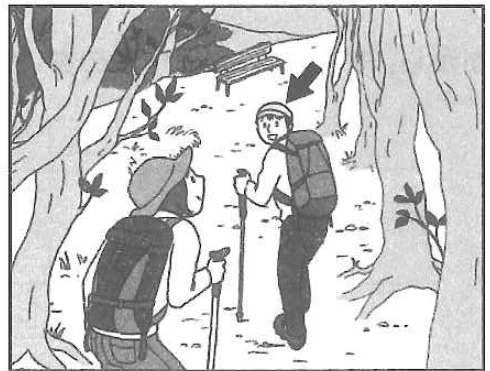
The choices are the numbered pictures above.
Show answer
Answer: 1.
-
5番
Show answer
Answer: 2. 3じかんはん
-
6番
Show answer
Answer: 2. ピザ
問題3発話表現Verbal expression
もんだい3では、えを 見ながら しつもんを 聞いて ください。やじるし(→)の 人は 何と 言いますか。1から3の 中から、いちばん いい ものを 一つ えらんで ください。
-
1番
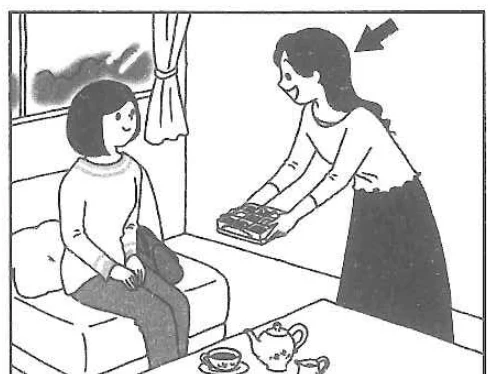
Show answer
Answer: 3. すこし休みましょう。
-
2番
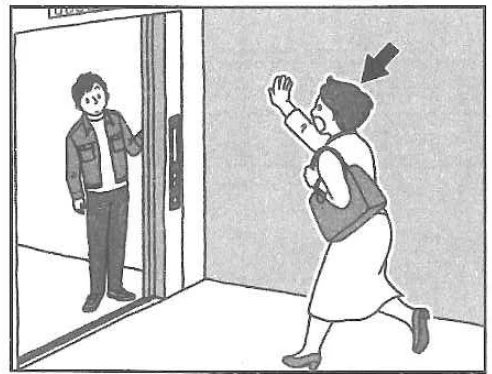
Show answer
Answer: 3. チョコレート、いかがですか。
-
3番
Show answer
Answer: 1. あ、乗ります!
-
4番
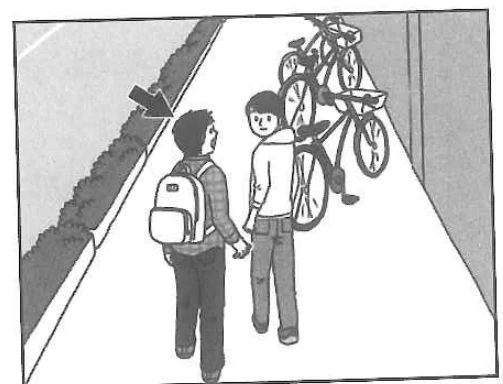
Show answer
Answer: 2. 危ないですよ。
-
5番
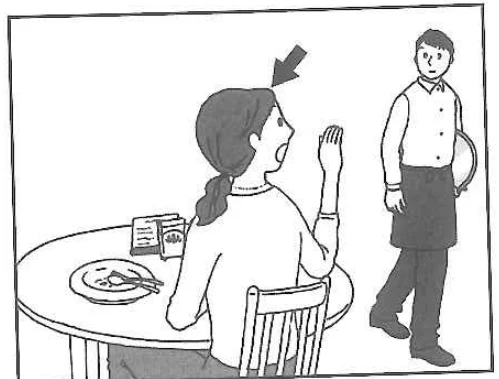
Show answer
Answer: 2. コーヒーはまだですか。
問題4即時応答Quick response
もんだい4では、えなどが ありません。まず ぶんを 聞いて ください。それから、そのへんじを 聞いて、1から3の 中から、いちばん いい ものを 一つ えらんで ください。
-
1番
Show answer
Answer: 1. 去年です。
-
2番
Show answer
Answer: 3. いえ、今からです。
-
3番
Show answer
Answer: 3. 私が作りました。
-
4番
Show answer
Answer: 2. 4時半の飛行機です。
-
5番
Show answer
Answer: 1. はい、わかりますよ。
-
6番
Show answer
Answer: 2. どこへも行きませんでした。
Explanations are AI-generated and are sometimes not accurate. Spotted a mistake in a question or answer? Write to us at hello@practicejlpt.com and we’ll fix it.